

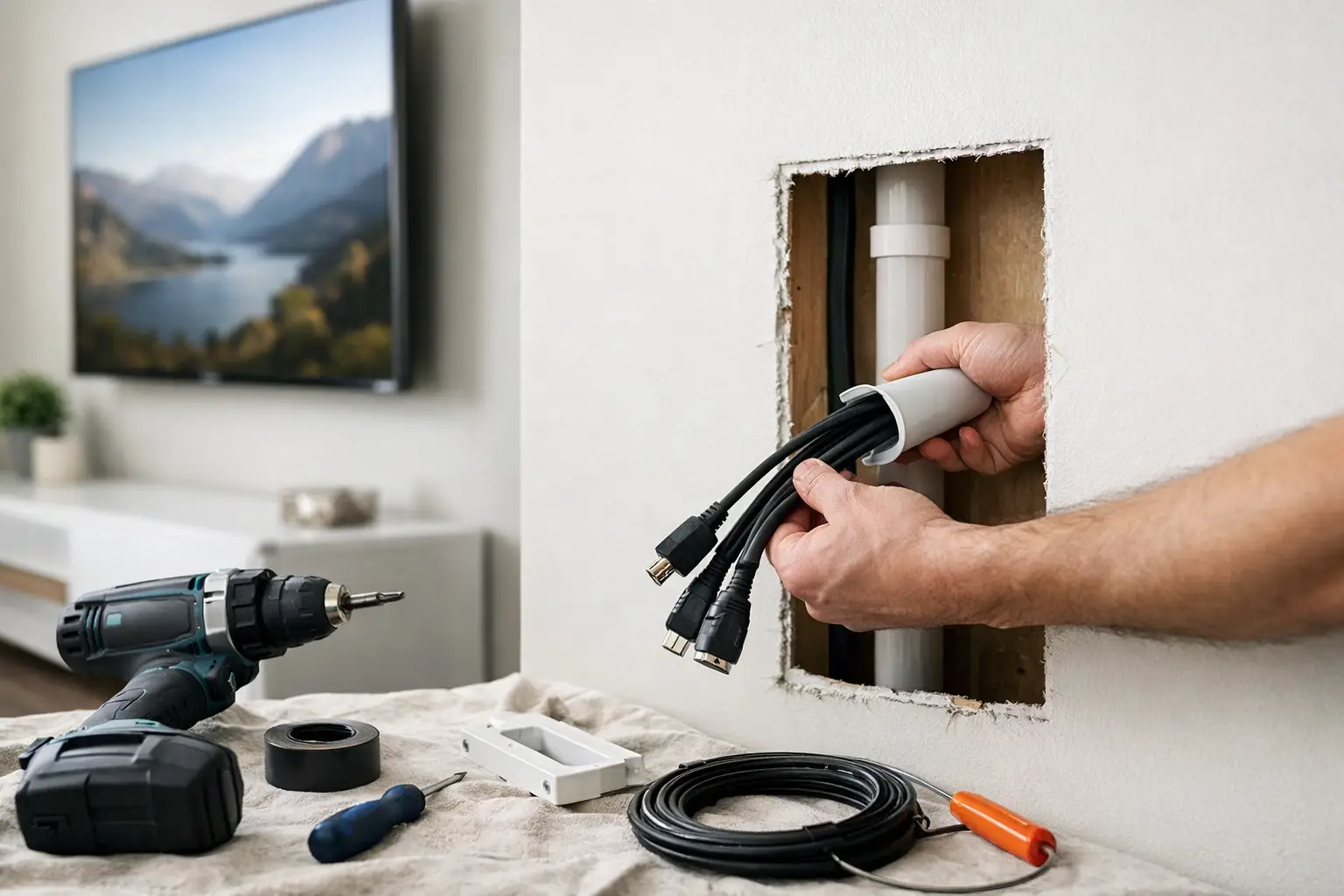
A mounted TV looks finished right up until the cords start hanging down the wall.
That small detail can make an otherwise clean living room feel unfinished, especially if you just moved in, upgraded your TV, or finally got around to mounting a screen in the bedroom. For many homeowners and renters, the next question is obvious: can you hide TV wires in the wall, and should you do it yourself?
The short answer is yes, in many cases you can. The better answer is that it depends on your wall, your power setup, and whether you want a fast cosmetic fix or a fully clean, code-conscious installation that you do not have to second-guess later.
Can You Hide TV Wires in Wall Safely?
Yes, but safety matters more than appearance.
When people say they want to hide TV wires in wall, they are usually talking about two different things: low-voltage cables like HDMI and ethernet, and the TV power cord. Those are not handled the same way. Low-voltage cables are generally simpler to route inside a wall. Standard TV power cords are where people get into trouble, because a factory-attached power cord is typically not rated to run loose behind drywall.
That distinction matters. A setup can look clean from the outside and still be the wrong installation behind the wall. If your goal is peace of mind along with a polished look, you want to plan for both.
The Cleanest Ways to Hide TV Wires
There is more than one way to get rid of visible cords. The right choice depends on your wall type, how permanent you want the setup to be, and whether you are in a house, condo, or rental.
In-wall cable pass-through kits
These kits are a popular option when you want a neat look without opening up a large section of drywall. They usually create an upper opening behind the TV and a lower opening near the outlet or media console, so low-voltage cables can pass through the wall cavity.
Some versions are designed only for low-voltage cables. Others include a power relocation system that safely brings power up behind the TV using code-conscious components. That is a major difference. If you are planning to plug the TV in behind the screen, you need a solution intended for in-wall power, not just a hole in the drywall.
Power relocation outlets
If you want the most finished look, a recessed outlet installed behind the TV often makes the biggest difference. This creates a true plug-in point where the TV mounts, so the power connection is hidden without running the factory cord loosely inside the wall.
This route tends to feel the most complete, especially in main living spaces where the TV is a permanent part of the room. It also helps when the mount sits flat and leaves very little room for bulky plugs.
Surface cord covers
Not every situation calls for cutting into drywall. A paintable cord cover can be the better choice if you are renting, working with brick or stone, or just want a faster solution with less disruption.
A cord cover is visible up close, but when installed neatly and painted to match the wall, it can still look clean. For some households, that trade-off is worth it. You avoid wall cuts, keep the install simple, and still get rid of the dangling-wire look.
What Makes an In-Wall TV Wire Job Go Smoothly
The wall itself usually decides how easy this project will be.
Standard drywall over wood studs is the most straightforward. If there is a clear cavity between the TV location and the lower outlet area, cable routing is often fairly simple. Exterior walls can be trickier because insulation may block the path. Walls with horizontal fire blocks can also slow things down because the cavity is not fully open from top to bottom.
Then there are surfaces that change the scope entirely. Brick, stone fireplace surrounds, plaster, tile, and metal studs all require a different approach. In some of those cases, in-wall concealment may still be possible, but it takes more planning and more care. In others, a surface raceway is the smarter option.
Stud location matters too. If the TV mount needs to be centered in one spot and the most convenient wire route lands directly over framing, the install may need adjustment. That is one reason this project can look easier online than it is in a real home.
Common Mistakes to Avoid
The most common mistake is treating every cable the same.
People often assume they can simply drop the TV power cord inside the wall along with HDMI cables. That is the part that can create safety and code concerns. Another frequent issue is cutting openings before confirming what is inside the wall. Plumbing, blocking, insulation, and unexpected framing can turn a quick afternoon project into patchwork.
Mounting height can create problems too. If the TV goes up first and the cord path is considered later, you may end up with openings in awkward places or cables that still show below the screen. A cleaner result comes from planning the mount, outlet position, and cable path together.
There is also the damage factor. Drywall is repairable, but that does not mean everyone wants to experiment with it in a living room or bedroom wall. If your goal is stress-free results, avoiding extra holes is part of the value.
DIY or Professional Help?
This is one of those projects where DIY can work well in the right situation.
If you have a simple drywall interior wall, a basic setup, and a clear understanding of what can and cannot go inside the wall, you may be comfortable handling it yourself. For many homeowners, though, the sticking point is not the cable drop. It is knowing the install is secure, aligned, and done the right way the first time.
That is where professional TV mounting often makes more sense than piecing the job together. You are not just paying for someone to hide a few cords. You are paying to avoid crooked placement, weak mounting, unnecessary wall damage, and the uncertainty that comes with power-routing decisions.
For busy households, that convenience matters. A clean TV wall should feel finished, not like a project you still need to monitor.
When It Makes Sense to Call a Pro
A professional install is especially helpful if your TV is large, your wall material is unusual, or you want a polished setup with minimal trial and error.
It also makes sense when the room is highly visible. In a main family room, open-concept living area, or primary bedroom, even small placement mistakes stand out. The same goes for homes where you just moved in and want the space set up quickly without adding another weekend project to the list.
If you are in Austin or Central Texas and want a clean, secure setup without the guesswork, Smart Solutions TX can help with mounting and wire-concealment planning as part of a stress-free in-home service experience. For many customers, the biggest benefit is simple: one appointment, one team, and a finished result that looks intentional.
A Better TV Setup Is About More Than Looks
Visible cords are frustrating because they make the whole room feel less settled.
When you hide TV wires in wall the right way, the improvement is immediate. The screen looks like it belongs there. The room feels cleaner. Kids and pets are less likely to snag cords. You also gain back that sense of order people want after a move, remodel, or room upgrade.
At the same time, the cleanest look is not always the best choice if it cuts corners. Sometimes the right answer is an in-wall solution. Sometimes it is a cord cover that protects the wall and keeps the install simple. Sometimes the best move is handing it off to someone who does this every day and can spot issues before they become repairs.
A good TV setup should look neat, feel secure, and leave you confident every time you walk into the room. If your current wall is one bundle of visible cables away from feeling finished, that small upgrade can make a bigger difference than most people expect.