

That first scrape on a dresser usually does not happen in the truck. It happens five minutes earlier, when someone rushes a tight turn, skips the padding, or assumes a solid wood piece can handle one more bump. If you want a stress-free move, furniture protection has to start before anything reaches the front door.
The best way to protect furniture when moving is to combine the right materials, careful prep, and smart lifting and loading. One without the others leaves gaps. A moving blanket helps, but not if drawers swing open. Plastic wrap helps, but not if sharp corners are exposed. Good protection is less about one magic product and more about a system that reduces friction, impact, moisture, and handling mistakes.
The best way to protect furniture when moving starts with prep
Most damage happens because furniture is moved as-is. That is usually where problems begin. A table with attached legs is harder to balance. A dresser with clothes still inside is heavier and more likely to twist. A glass shelf left in place turns a manageable item into a risk.
Before wrapping anything, take a few minutes to prepare each piece. Remove loose shelves, legs, cushions, and hardware when possible. Empty drawers unless the piece is lightweight and structurally sound enough to handle transport without strain. For larger items, place screws, bolts, and brackets in a labeled bag and tape that bag to the underside or back of the furniture so nothing gets lost.
This step can feel like extra work when you are on a deadline, but it saves time later. Furniture that is lighter, tighter, and easier to grip is far less likely to get dropped, dragged, or wedged into a doorway.
Use the right protection for the material
Not every furniture surface should be wrapped the same way. One of the most common mistakes is treating wood, glass, upholstered pieces, and laminate as if they all respond well to the same materials.
Wood furniture
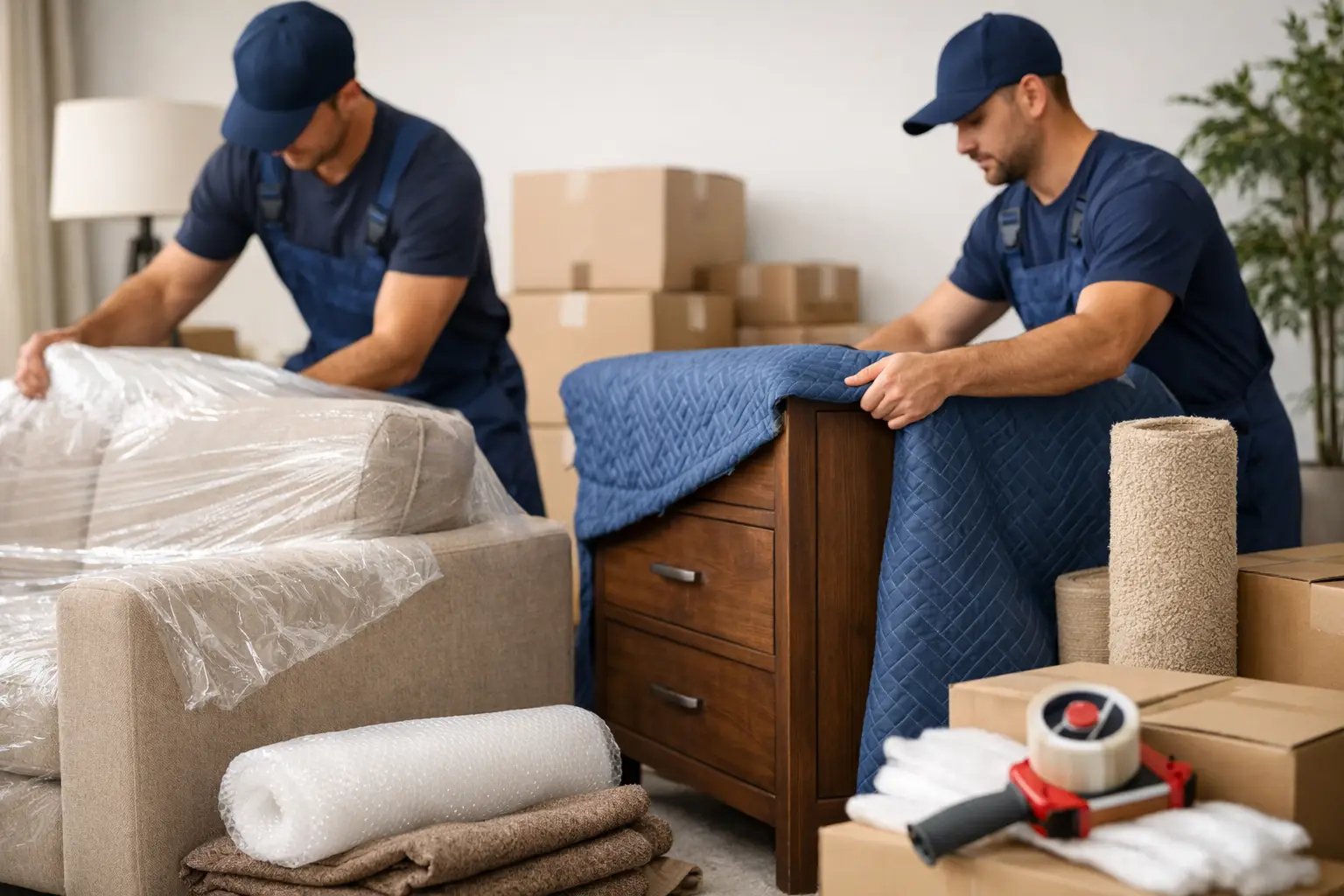
Wood needs protection from scratches, dents, and pressure. Start with moving blankets or thick furniture pads. If you use stretch wrap, wrap over the blanket rather than directly against delicate finishes when possible. Plastic pulled tightly against some finished wood surfaces for too long can trap moisture or leave marks, especially in heat.
Corners deserve extra attention. Add cardboard corner guards or folded padding to high-impact spots on dressers, bed frames, and dining tables. If a wood piece has a polished top, do not stack anything directly on it, even if it looks well covered.
Upholstered furniture
Fabric furniture needs protection from dirt, tears, and moisture. A clean plastic sofa cover or mattress-style bag works well for couches and chairs, especially during loading and unloading. If the move involves bad weather or a long drive, this matters even more.
That said, plastic alone does not stop impact damage. If the piece has exposed legs, wood trim, or sharp edges, use blankets underneath the plastic or pad those areas separately.
Glass and mirrors
Glass should always be removed and packed separately when possible. Wrap each panel in packing paper, then bubble wrap, then place it in a snug box or mirror carton. Tape a large X across mirror or glass surfaces before wrapping to reduce shattering risk if breakage occurs.
Do not lay glass flat in the truck. It is safer upright, secured between padded items with no room to slide.
Laminate, veneer, and flat-pack furniture
These pieces often look sturdy but can be more vulnerable than solid wood. Particleboard and laminate furniture can chip at the edges, loosen at the joints, or fail under uneven weight. Disassembling is usually the safer choice, especially for bookshelves, entertainment stands, and desks.
When in doubt, protect the edges and avoid overtightening wrap or straps. Pressure can do as much damage as impact.
Wrapping furniture the right way
Good wrapping should protect the item without creating new problems. If you use tape, never place it directly on finished surfaces, fabric, or leather. Tape adhesive can peel coatings, leave residue, or discolor material.
Instead, secure padding with stretch wrap, packing paper, or tape applied only to the padding itself. For drawers and doors, wrap the entire piece so parts stay shut during the move. This is safer than taping drawers closed, which can damage the finish or leave sticky residue behind.
For delicate items, use layers. A blanket gives cushioning. Stretch wrap holds it in place. Corner padding adds impact protection. That combination works better than any single material on its own.
Loading matters as much as packing
Even perfectly wrapped furniture can be damaged by poor loading. Once items are in the truck, the goal is to prevent shifting, crushing, and unnecessary pressure.
Heavy furniture should go in first and sit against the walls of the truck for stability. Lighter and more fragile pieces should never carry weight they were not designed to support. Dining chairs can often stack safely with padding between them, but end tables with decorative legs should not be buried under boxes.
Use tie-downs or straps to secure larger items so they do not slide in transit. Leave as little open space as possible, because movement inside the truck creates impact. At the same time, avoid packing so tightly that furniture is forced against sharp edges or compressed under weight.
This is where experience makes a real difference. A truck packed for speed is not always packed for protection. The safest load is balanced, padded, and intentionally placed.
Watch the problem areas inside the home
A lot of people focus on the truck and forget the house or apartment itself. Door frames, stair rails, tight hallways, and elevators cause plenty of damage before the drive even starts.
Measure bulky pieces in advance, especially sectionals, bed frames, and large dressers. If a piece is a tight fit, do not force it through at the wrong angle. Remove feet, detach doors, or disassemble first. Protect wall corners and entry points if needed, particularly in narrow spaces.
If you are moving from or into a building with elevators, reserve enough time so the move does not turn into a rushed loading session in a shared hallway. Speed tends to create carelessness, and carelessness is expensive.
When DIY protection works and when it does not
Some moves are manageable with basic supplies and a careful plan. If you are moving a small apartment locally, have sturdy help, and own furniture that can be easily disassembled, a DIY approach may be enough.
But there are trade-offs. Large sectionals, solid wood bedroom sets, glass-front cabinets, and expensive assembled furniture usually need more than a few blankets and good intentions. The risk goes up if stairs, long carries, or tight turns are involved. The same goes for families or working professionals trying to pack and move on a compressed schedule.
In those cases, the best way to protect furniture when moving may be to hand it off to a team that does this every day. Professional movers know how to pad, carry, load, and secure furniture without turning your move into a trial-and-error project. For homeowners and renters in Central Texas who want a stress-free move with less risk of damage, Smart Solutions TX can help handle the heavy lifting and the details at https://smartsolutions-tx.com/.
A few mistakes that cause the most damage
Most furniture damage comes back to a small set of avoidable mistakes. Dragging instead of lifting ruins legs and floors. Leaving hardware loose leads to instability. Wrapping with the wrong material can trap moisture or scratch the finish. Overloading drawers and shelves adds strain where furniture is weakest.
Another common issue is assuming newer furniture is stronger than older furniture. In reality, some modern pieces are lighter because they are made with less durable materials. They need more care, not less.
Protecting furniture is really about controlling risk
No move is completely free of risk. Weather changes, schedules tighten up, and heavy items do not always cooperate. But furniture usually gets damaged when small decisions pile up – skipping prep, using the wrong wrap, lifting without a plan, or rushing the load.
If you want your furniture to arrive in the same condition it left, think beyond packing supplies. Protect the finish, protect the structure, and protect the route it has to travel. A little planning upfront makes the whole move feel more controlled, and that peace of mind is worth a lot when the boxes start stacking up.