

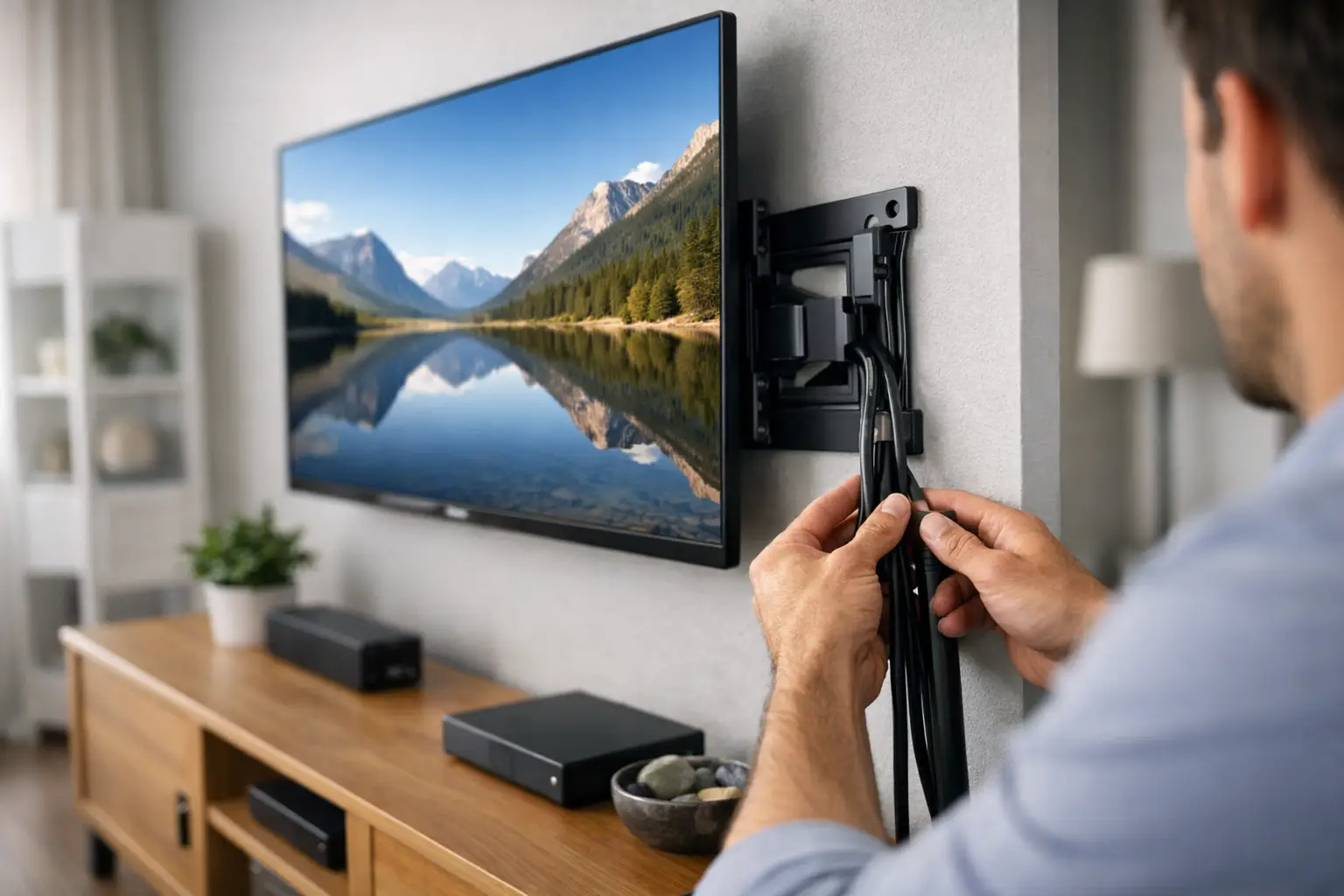
A great TV setup can make a room feel finished. A bad one usually announces itself right away – a screen hung a little too high, cords dangling down the wall, devices stacked awkwardly on a console, and that lingering worry that the mount may not be as secure as it should be.
That is why tv mounting with cable management matters more than most people expect. It is not just about appearance. It is about safety, function, and making everyday use feel easier from the first movie night forward.
Why tv mounting with cable management matters
When a television is mounted well, the room feels cleaner and more intentional. Cables are one of the biggest reasons mounted TVs still look unfinished. Even a premium screen can look cluttered if power cords, HDMI lines, and streaming device cables are hanging in plain view.
There is also a practical side. Loose cords collect dust, get tugged during cleaning, and can create a hazard for kids and pets. In smaller apartments and busy family homes, reducing cable clutter can make the space feel more open and easier to manage.
For many homeowners and renters, the real value is peace of mind. A properly mounted TV should feel secure on the wall, sit at a comfortable viewing height, and keep wiring organized in a way that supports the devices you actually use. That includes soundbars, gaming consoles, cable boxes, and streaming equipment.
A clean result starts before the mount goes up
The best TV installation jobs are planned before the first hole is drilled. Wall type, stud placement, outlet location, screen size, and furniture layout all affect the final result. Cable management is part of that planning, not an extra detail added at the end.
For example, if your outlet sits low on the wall but your TV is mounted much higher, the installer needs a clear plan for how cables will travel. If you want a floating look with no visible wires, the method matters. If you are in a rental, the approach may need to protect the wall and stay within lease rules.
This is where many DIY setups go off track. People choose the mount first, then try to hide the cables after the fact. Usually that leads to visible cord covers, awkward device placement, or extra wall patching later.
The right height and placement change everything
A clean installation is not only about hiding wires. Placement affects comfort every day. If the TV is too high, neck strain becomes part of the experience. If it is off-center from the seating area, the room can feel slightly wrong even when the screen looks level.
The right height depends on the room, the size of the TV, and how you watch it. A bedroom setup may be different from a living room with sectional seating. A fireplace wall might look attractive, but it is not always the best option if heat, height, or outlet access create problems. Sometimes the most visually appealing wall is not the most functional one.
Your cable management options
There is no one-size-fits-all answer for cable management. The best method depends on the wall, the building, the equipment, and how finished you want the final look to be.
An external cord cover is often the fastest option. It keeps wires bundled and tidy on the wall surface, and it can usually be painted to match the wall color. This works well when speed and simplicity matter most, or when wall access is limited.
In-wall cable routing gives a cleaner look because the cords are hidden behind the wall. This can be a strong choice for homeowners who want the setup to feel more built-in. It does require the right wall conditions and should be done carefully, especially when power is involved.
Some setups also benefit from placing devices strategically rather than trying to hide everything behind the TV. A media console, floating shelf, or nearby cabinet can reduce cable runs and make future upgrades easier. That trade-off is worth considering if you swap devices often or want easier access for resets and connections.
What renters should think about
Renters often assume mounting a TV is off limits, but that is not always true. What matters is the lease, the wall type, and whether the installation can be done in a controlled, low-risk way. Some landlords allow mounting as long as damage is minimal and patched properly at move-out.
Cable management matters even more in rentals because visible cords can make a small space feel cluttered fast. A neat cord cover may be the better fit than a more permanent in-wall solution. It depends on the unit and what you are allowed to modify.
A stress-free setup for renters is usually the one that balances a clean appearance with easier restoration later. The goal is to enjoy the space now without creating a larger repair project down the road.
Common problems people run into
The most common issue is mounting into the wrong part of the wall or using hardware that does not match the wall type. Drywall alone is not enough for most TV installations, and not every wall behind a TV is a simple stud-and-drywall situation. Brick, concrete, metal studs, and above-fireplace surfaces each change the installation plan.
The second problem is underestimating how many cables need to be managed. It is rarely just one power cord. Once a soundbar, gaming console, streaming box, and internet device enter the picture, cable clutter multiplies quickly.
The third is future access. A setup may look good on day one but become frustrating if every small change requires taking the TV down. This is especially relevant for households that upgrade devices, add speakers, or change internet equipment over time.
That is why a dependable installation should account for both the current setup and what is likely to change later. A little foresight saves a lot of hassle.
Why professional installation often pays off
A mounted TV seems straightforward until the details pile up. Finding studs, checking wall composition, selecting the right hardware, keeping the screen level, protecting the wall finish, and organizing cables all take time. If the TV is large, the job also becomes physically awkward and riskier to do alone.
Professional service is often less about the mount itself and more about reducing stress. You are paying for accurate placement, secure installation, and a cleaner result without trial and error. For busy professionals, families, and anyone settling into a new home, that convenience matters.
It also helps to know who is coming into your home and what happens if something goes wrong. Trust matters with any in-home project. That is one reason many customers choose providers that emphasize vetted technicians, clear scheduling, and a service guarantee. Smart Solutions TX is built around that kind of experience, with fast booking, background-checked technicians, and a 90-day service guarantee designed to make home setup feel more manageable.
How to prepare for a smooth installation
If you are planning tv mounting with cable management, a little prep can make the appointment faster and the final layout better. Start by deciding which devices need to connect to the TV right away. That includes sound systems, consoles, streaming boxes, and anything else that affects cable routing.
It also helps to clear the area around the wall and nearby furniture. If you already have a preferred viewing position, note that before installation starts. In open-concept rooms, even a few inches can make a difference in how natural the setup feels from the couch or dining area.
If you are unsure where the TV should go, that is normal. A good installer can help evaluate the room, the wall, and the equipment so the setup works in real life, not just in theory.
What a finished setup should feel like
The best TV installation does not call attention to itself. The screen feels centered, the height feels comfortable, the mount feels secure, and the cables are handled cleanly enough that the room looks calmer right away.
That may sound simple, but it is exactly why this service matters. A TV is one of the most used items in the home, and the way it is installed affects the space every single day. When the job is done right, you stop thinking about cords, tilt angles, and whether the hardware will hold. You just use the room the way you wanted to.
If you are setting up a new home, upgrading a living room, or trying to make a rental feel more polished, a carefully planned install can remove a surprising amount of friction. Sometimes the biggest win is not the mounted screen itself. It is the relief of knowing the job is handled, the wall is protected, and your space finally looks the way it should.