

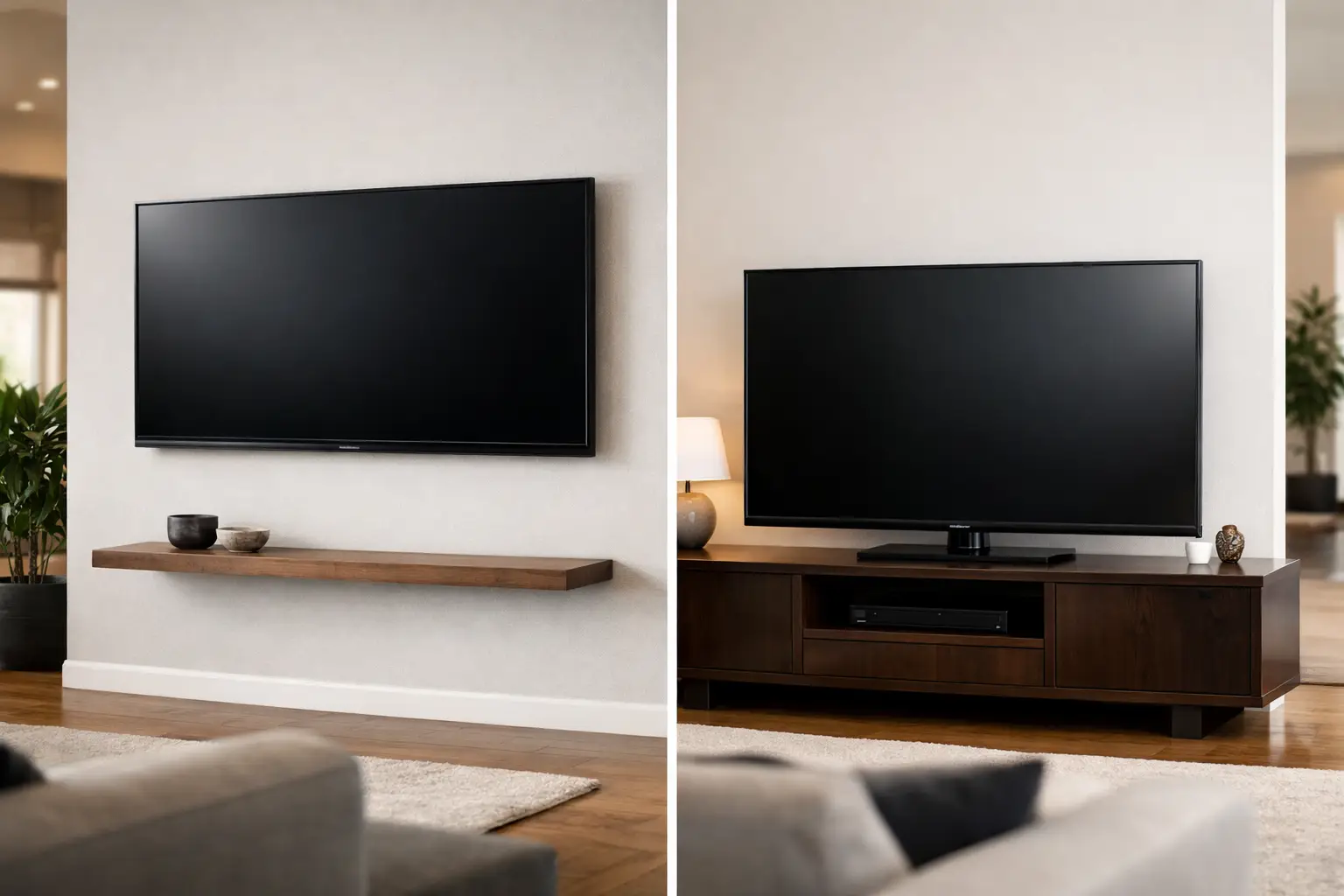
You usually feel this decision right after move-in. The couch is in place, the boxes are still half-open, and the TV is leaning against a wall while you ask the same question most homeowners and renters do: should you mount it or set it on a stand? When it comes to tv mounting vs tv stand, the right answer depends less on trends and more on how you use your space, how permanent you want the setup to be, and how much risk you want to take on yourself.
For some homes, mounting is the clear win. For others, a stand is the smarter and more flexible choice. The best setup is the one that makes daily life easier, looks clean, and does not create extra stress every time someone bumps the furniture or a child gets too close to the screen.
TV Mounting vs TV Stand: What really changes?
At a glance, both options do the same thing. They hold your TV and give you a place to watch it. But the day-to-day experience is different.
A mounted TV creates a more permanent, built-in feel. It opens up floor space, keeps the screen out of reach, and can make the room look more organized. A TV stand gives you mobility, storage, and a setup that is easier to change later. Neither is automatically better. It depends on your room, your walls, your furniture, and your tolerance for DIY mistakes.
If your top priority is a polished look with fewer visible wires and less clutter, mounting usually comes out ahead. If you expect to rearrange often, move soon, or avoid drilling into walls, a stand often makes more sense.
When TV mounting makes more sense
Mounting is often the better fit for busy households that want a clean, secure setup and do not want the TV to dominate the room. In smaller living rooms, bedrooms, and apartments, getting the screen off the furniture can make the whole space feel less cramped.
Safety is one of the biggest reasons people choose this route. A properly mounted TV is less likely to tip, wobble, or get pulled forward. That matters if you have toddlers, active kids, or pets with a habit of turning every surface into a launch point. It also helps in high-traffic spaces where bumping into a media console is more likely.
Mounting can also improve viewing comfort. When the TV is placed at the right height and angle, you avoid the awkward neck strain that happens when a stand is too low or the room layout forces a bad viewing position. In open-concept homes, a mount with tilt or swivel can make a big difference, especially when you watch from more than one seating area.
Then there is the visual side. Mounting tends to look more intentional. If you want a setup that feels finished rather than temporary, this is usually the stronger option. It works especially well in living rooms where homeowners want a cleaner focal point without adding a bulky piece of furniture underneath.
The trade-off is permanence. Once you mount a TV, changing its position takes more effort. Wall type matters too. Drywall, brick, concrete, metal studs, and fireplace installs all come with different challenges. A bad install can mean loose brackets, damaged walls, exposed cords, or worse, a screen that is not truly secure.
Mounting is often ideal if:
You want to save floor space, reduce tip-over risk, create a cleaner look, or set up a room you do not plan to rearrange much. It is also a strong choice if your current furniture is too shallow, too low, or simply not built to support the size and weight of your TV.
When a TV stand is the better choice
A stand is not the lesser option. In many homes, it is the more practical one.
If you rent and want to avoid wall holes, a stand keeps things simple. If you expect to move within a year, it may not be worth mounting and patching later. A stand also makes sense if you like changing your room layout, upgrading furniture, or shifting the TV between rooms over time.
Storage is another major advantage. A TV stand can hold soundbars, gaming consoles, remotes, streaming devices, and all the small accessories that tend to pile up around a screen. If your living room already needs furniture for organization, a stand can serve two purposes at once.
There is also less commitment. You can set the TV up quickly, test different placements, and adjust as your room evolves. That flexibility is valuable for first apartments, guest rooms, college housing, and family rooms where priorities change often.
The downside is that stands take up floor space and can create a more crowded look. They also leave the TV easier to bump, tip, or grab. Even when a TV is technically stable on its base, it may not feel especially secure in a home with children or pets. Cord management can also become a constant battle unless the furniture was designed well.
A stand is often ideal if:
You want flexibility, need extra storage, rent with strict wall rules, or are not ready to commit to one layout. It is also a smart option for rooms where the TV is secondary and does not need a built-in look.
Cost is not just about the bracket or furniture
A lot of people compare the price of a mount to the price of a stand and stop there. That does not tell the full story.
Mounting may look cheaper on paper if the bracket costs less than a new media console. But proper installation can require stud finding, level placement, the right anchors and hardware, wire management, and sometimes help lifting a larger screen safely into place. If something goes wrong, the cost of repairing drywall or replacing a damaged TV changes the equation fast.
A stand may cost more upfront if you are buying a quality piece of furniture, but installation is usually simpler. Still, there are hidden costs there too. You may end up buying anti-tip straps, cord covers, or extra storage pieces if the stand does not solve the whole setup.
For many households, the real question is not which option is cheapest. It is which one creates the fewest problems later.
TV mounting vs TV stand for renters and homeowners
Renters usually lean toward stands for one obvious reason: flexibility. If your lease limits wall modifications or you know you will move again soon, a stand can save time and avoid repair work at move-out.
That said, plenty of renters still choose mounting, especially in apartments with limited square footage. When floor space is tight, getting the TV onto the wall can make the room work better. The key is making sure the installation is done correctly and that you understand what will be required when it is time to leave.
Homeowners generally have more freedom, which makes mounting more appealing. If you are investing in the space and want a setup that feels finished, mounting often aligns better with that goal. It can also pair well with other home setup projects, especially after a move when you want everything handled in one visit instead of stretched across multiple weekends.
The room matters more than people think
The right answer can change from room to room.
In a primary living room, mounting often wins because it improves sightlines and clears space. In a bedroom, it depends on bed height, dresser height, and whether you need storage below the screen. In a kids’ room or playroom, safety becomes the biggest factor, which usually gives mounting the edge. In a home office or guest room, a stand may be perfectly fine because the TV is used less often and flexibility matters more.
Fireplace setups deserve extra caution. They can look great, but heat, height, and wall material all need to be considered carefully. This is one of those situations where guessing your way through the install can create a frustrating and expensive result.
What to ask before you choose
Before you decide, think about how long you will stay in the home, whether kids or pets are part of the picture, how often you rearrange furniture, and whether storage is a need or just a nice extra. Also ask yourself how confident you feel handling measuring, drilling, lifting, and securing a large screen without damaging the wall.
That last part matters. Many people are comfortable assembling a stand but less comfortable mounting a TV, especially on anything other than a simple drywall-and-wood-stud wall. There is a big difference between getting the TV on the wall and getting it truly level, secure, and placed at the right height.
For homeowners and renters in Austin and Central Texas who want a stress-free setup, Smart Solutions TX helps take the guesswork out of that decision. Some customers need a secure wall mount. Others just need help getting the room functional fast. Either way, peace of mind comes from knowing the job is handled with care.
A good TV setup should make your room feel easier to live in, not give you one more unfinished project to think about. Choose the option that fits your space now, your plans later, and the level of effort you really want on your plate.