

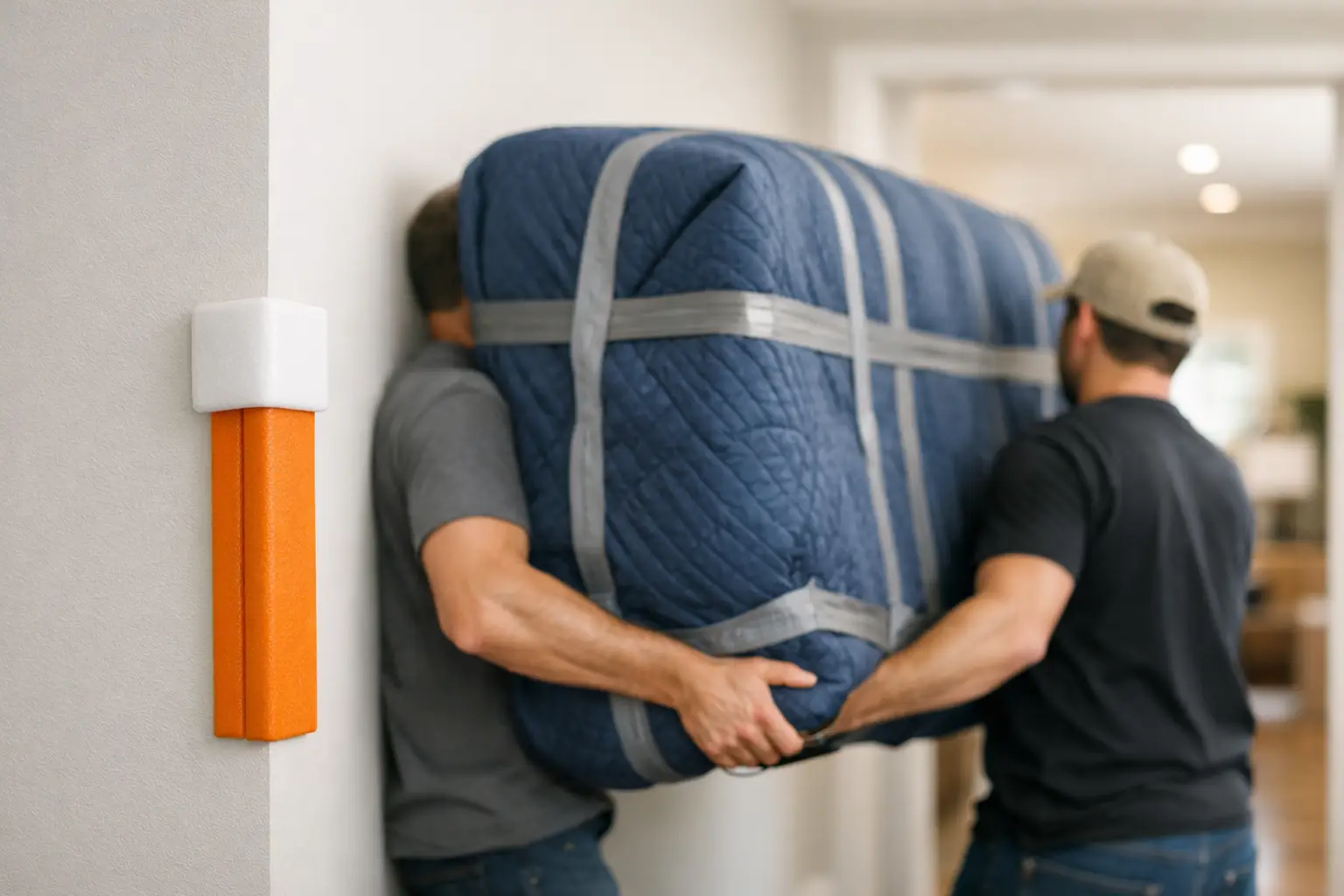
A sofa corner catches the hallway wall. A dresser clips a doorframe. One rushed trip down the stairs leaves a long black scuff beside the front door. That is usually how wall damage happens during a move – not from one major disaster, but from small, preventable moments. Knowing how to protect walls when moving helps you avoid repair bills, protect your security deposit, and arrive at your new home without adding another project to your list.
The goal is not to wrap every surface in your home. It is to create a protected path, prepare bulky items properly, and move at a pace that keeps people and belongings under control. A little planning makes a big difference, especially in tight Austin apartments, narrow stairwells, and homes with freshly painted walls.
Why Walls Get Damaged During a Move
Walls are most vulnerable where space is limited: entryways, corners, stair landings, hallways, and doorframes. Large furniture can be difficult to judge from one end, particularly when two people are carrying it and neither has a clear view of the wall ahead.
The risk also increases when items are not prepared for the move. Exposed metal legs, sharp box corners, loose drawers, and unwrapped frames can scrape paint or dent drywall in seconds. Rain, heat, fatigue, and a rushed schedule can make careful handling even harder.
Renters often focus on protecting furniture and forget that a few scuffs may become a move-out charge. Homeowners face a different issue: repairing walls before listing, settling in, or hosting guests. Either way, prevention is easier than patching, sanding, color-matching, and repainting later.
How to Protect Walls When Moving: Plan the Route First
Before the first box leaves a room, walk the complete route from the room to the truck. Look for tight turns, low ceilings, exposed corners, uneven thresholds, and anything that narrows the path. Measure large items such as sectionals, bed frames, dressers, refrigerators, and oversized TVs before attempting to carry them through a doorway.
Remove obstacles that create rushed adjustments. Take down wall art, move floor lamps, roll up rugs that could slip, and clear shoes, toys, and small furniture from hallways. Keep pets and children away from the active moving path so the team can focus on each carry.
It also helps to choose one entrance for moving whenever possible. Instead of people taking different routes through the house, establish a clear path from each room to the truck. Fewer routes mean fewer walls, corners, and doorways to protect.
Measure before you lift
If a piece will not fit comfortably through a doorway, do not force it. Remove legs, take apart a bed frame, detach a mirror from a dresser, or reposition the item before moving it. For some pieces, turning the furniture on its side or carrying it vertically can create needed clearance, but only when the item is stable and the people carrying it can maintain control.
A few extra minutes spent measuring can prevent a damaged wall, broken furniture, or a painful injury.
Protect High-Traffic Surfaces
You do not need professional-grade protection throughout every room. Focus on the places most likely to take an impact. Heavy-duty cardboard, moving blankets, and wall-protection pads are practical options for hallways, staircases, corners, and doorframes.
For walls, secure clean moving blankets or flattened cardboard over the most exposed sections. Painter’s tape is usually a safer choice than aggressive tape because it is less likely to pull up paint when removed. Test tape in an inconspicuous spot first, especially in older homes or on recently painted surfaces.
Doorframes and outside corners deserve extra attention. They take the first hit from furniture edges and are more likely to chip than a flat wall. Foam corner guards can help, but a thick moving blanket taped securely around a vulnerable doorway can also provide useful cushioning.
Protect floors as well. A slipping mover or a box that catches on a rug can quickly become wall damage. Use floor runners, cardboard, or moving blankets where needed, and keep the path dry. In Central Texas, wet shoes after a storm can turn tile, hardwood, and concrete entries into a real hazard.
Wrap Furniture for the Trip Through Your Home
Blankets are not only for protecting furniture inside the truck. They protect your walls during the carry, too. Wrap dressers, tables, headboards, mirrors, and electronics before bringing them through the house. Secure blankets with stretch wrap, moving bands, or tape placed on the blanket itself, not directly on delicate furniture finishes.
Pay special attention to sharp or protruding areas. Table corners, metal bed rails, desk edges, and the arms of a sofa can all cause damage if they swing toward a wall. Cardboard corner protectors add another layer of defense for especially angular pieces.
Remove drawers, shelves, and loose components when possible. A drawer sliding open shifts the weight of the item and can cause the people carrying it to lose balance. Smaller pieces should be packed separately, labeled clearly, and loaded only after the main furniture is secure.
TVs, mirrors, framed art, and glass tabletops require more than a blanket tossed over the top. Use proper boxes or padded protection designed for fragile, flat items. Carry them upright, keep them away from traffic, and never lean them unsecured against a wall where they could tip.
Carry With Control, Not Speed
Most wall damage happens when people try to save time by moving too fast. A controlled pace is usually faster overall because it prevents the stops, repairs, and frustration that come after a collision.
For large items, assign one person to guide the route and call out turns, thresholds, and clearance. The person walking backward should not be left guessing what is behind them. Use simple, direct communication: “Stop,” “lift,” “turn left,” or “clear the corner.”
Furniture sliders and hand trucks can reduce strain, but they are not right for every situation. A dolly works well for stacked boxes and appliances on level ground, while a shoulder-dolly system may help with bulky furniture. On stairs or narrow turns, however, the safest choice may be a trained two-person carry with enough room to move deliberately.
Never drag furniture along a wall to reposition it. Set it down, reset your grip, and make the next move with room to spare. If an item feels too heavy or awkward, pause instead of forcing it through.
Load the Truck in a Way That Prevents Repeat Handling
A disorganized truck creates more trips through the house, more chances for walls to be bumped, and more stress at unloading. Load large, heavy items first and secure them against the truck wall with straps. Keep mattresses, sofas, and padded furniture positioned so they protect more fragile pieces without crushing them.
Place boxes by room and weight, with heavier boxes on the bottom. Keep an aisle only if it is necessary for safe access. The fewer times you have to unload and reload an item to find space, the less likely it is to scrape a doorway or hallway on the way out.
At the new home, repeat the same process in reverse. Walk the route, protect vulnerable areas, and bring in the largest furniture first. It is tempting to rush after a long moving day, but new walls are just as easy to damage as the old ones.
When Professional Moving Help Is Worth It
Some moves are manageable with friends and basic supplies. Others call for experienced hands, especially when you have heavy furniture, multiple flights of stairs, tight apartment corridors, fragile items, or a limited move-out window. The cost of help can be less than replacing a damaged TV, repairing drywall, or losing time from work.
A reliable moving team brings the right equipment, knows how to handle awkward pieces, and can keep the move organized from packing and loading to unloading. For homeowners and renters who want a careful, stress-free experience, Smart Solutions TX provides hands-on moving support from background-checked technicians, backed by a 90-day service guarantee.
Before the first box moves, protect the route that box will travel. Clear the space, pad the vulnerable areas, wrap the sharp edges, and give every heavy item the time and people it needs. Your walls will stay cleaner, your move will feel calmer, and your new place can begin as a home instead of a repair project.