

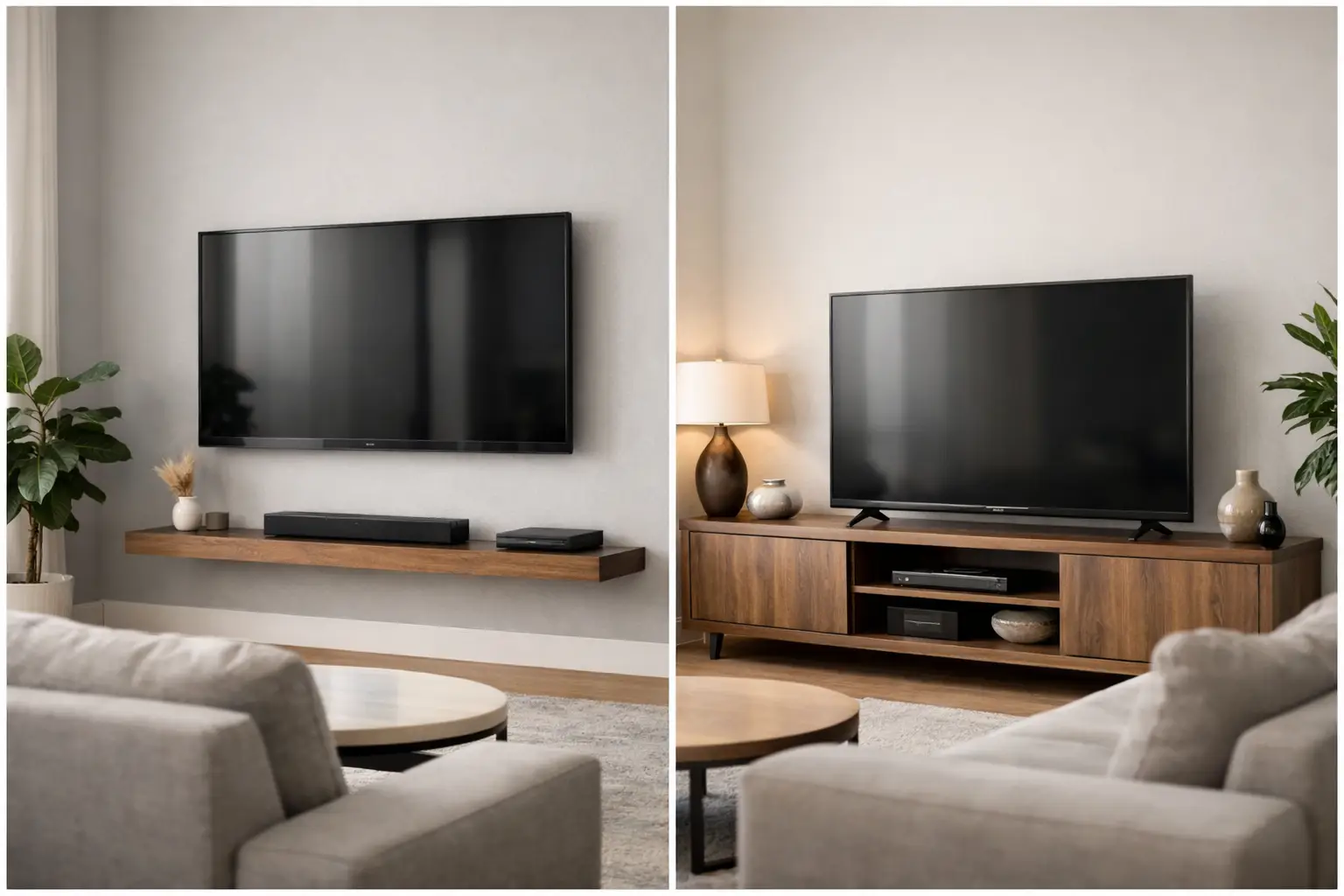
A big TV changes a room fast, but the setup decision usually comes down to one question: wall mount or TV stand? The right answer depends on how you use the room, who lives in the home, and how much flexibility you want after move-in day. What looks best in a photo is not always what works best in real life.
Wall mount or TV stand: start with how you use the room
If your living room does double duty for movie nights, kids’ playtime, and everyday traffic, a wall-mounted TV often makes the space feel cleaner and easier to move through. It lifts the screen off the furniture, frees up floor area, and reduces the chance of bumps or tip-related accidents. For families with toddlers or pets, that extra security matters.
A TV stand, though, still makes sense in plenty of homes. If you rearrange often, rent an apartment with strict wall rules, or expect to move again soon, a stand gives you flexibility without putting holes in the wall. It can also be the simpler option if your room layout is still evolving and you are not ready to commit to one viewing angle.
The best choice usually comes down to permanence versus flexibility. A mount is more intentional. A stand is more adaptable.
When a wall mount is the better fit
A wall mount works especially well when you want a polished, built-in look. It helps the room feel less crowded because the screen sits above the floor and media furniture can stay lower and less bulky. In smaller apartments, condos, and bedrooms, that visual breathing room can make a big difference.
Mounting also helps with viewing height. Many people place TVs too low on stands or too high above fireplaces. A properly installed wall mount can position the screen at a more comfortable level for the way you actually sit, whether that is upright on a sectional or reclined in bed. If glare is an issue, a tilting or full-motion mount can improve the viewing experience even more.
There is also the cable issue. A mounted TV can look much cleaner when wires are managed correctly. Instead of a cluster of cords dropping behind furniture, you get a setup that feels organized from day one. That matters if you care about a room looking finished rather than halfway set up.
Still, wall mounting is not automatically the right move. Your wall type matters. Drywall over wood studs is usually straightforward, but brick, concrete, metal studs, and older homes can add complexity. The TV size and weight matter too, along with what devices need to connect underneath. Good results depend on more than getting the screen on the wall. The mount needs to be secure, level, and placed with the whole room in mind.
When a TV stand makes more sense
A TV stand is the practical choice when flexibility matters more than a built-in look. If you lease your home, move frequently, or like to change furniture layouts seasonally, a stand keeps your options open. You can shift the room around without patching walls or remounting hardware.
Stands also offer built-in storage, which is a real advantage if you have gaming consoles, sound equipment, routers, remotes, or kids’ accessories that need a home. In some spaces, a media console does more than hold a TV. It grounds the room, adds storage, and fills a wall in a way that feels balanced.
Cost can be another factor. If you already own a sturdy stand, using it may be the most budget-friendly route. Wall mounting often involves the mount itself, installation tools, stud placement, and cable management decisions. A stand can feel simpler because the setup is more familiar.
That said, simpler is not always safer. A TV on a stand still needs to be stable, especially in homes with children or pets. The larger the screen, the more important that becomes. A stand setup should never feel wobbly or top-heavy.
Safety matters more than style
Style gets the attention, but safety should make the decision clearer. If your TV is large, your household is active, or your furniture is lightweight, a secure wall mount usually provides more peace of mind. It reduces the risk of the screen being pulled forward, bumped, or knocked off balance.
With a stand, the safety conversation shifts to both the TV and the furniture. Is the console rated to hold the weight? Is it sitting level? Could a child climb it? Does the base extend wide enough for the screen size? These are not small details. They affect how the setup performs after the room is lived in, not just staged.
For many households, the safest choice is the one that removes as much risk as possible. That is one reason professionally installed mounts remain popular for main living areas and family rooms.
Think about the wall before you decide
One of the biggest reasons people hesitate to mount a TV is fear of wall damage. That concern is fair. A poorly placed mount can leave extra holes, uneven placement, or worse, an insecure hold that puts both the wall and the TV at risk.
But wall mounting is not inherently damaging when it is planned correctly. The key is understanding the wall structure, choosing the right hardware, and placing the mount where it supports both the TV and the room layout. Done well, it is a secure long-term solution. Done poorly, it becomes a patch-and-repair project.
If you are renting, check your lease first. Some landlords allow minor wall modifications, while others are stricter. If you own the home, the question becomes less about permission and more about precision. A clean installation usually pays off in both appearance and daily use.
Room layout changes the answer
There is no universal winner in the wall mount or TV stand debate because the room itself changes the math. A narrow room with limited walking space often benefits from mounting. An open-concept room with a substantial media console may look and function better with a stand. Bedrooms, home offices, lofts, and game rooms all have different viewing patterns.
You also need to think about seating. If everyone watches from one main couch, a fixed mount can work well. If the room has multiple seating angles or the TV needs to turn toward a dining area or kitchen, a stand or a full-motion mount might make more sense.
Fireplaces complicate things too. Mounting above one can look clean, but if it places the TV too high, comfort suffers. In many cases, another wall or a stand-based setup leads to better everyday viewing. Good setup is not about following trends. It is about making the room easy to live in.
Cost, effort, and long-term convenience
At first glance, a TV stand can seem like the lower-effort option. Set the furniture, place the TV, and you are done. But that only holds true if the stand fits the screen correctly, the cords stay manageable, and the room layout already works.
A wall mount can require more upfront planning, but it often saves frustration later. You do not have to worry about the screen taking up surface space, shifting out of position, or limiting furniture choices underneath. Once installed well, it tends to feel more intentional and less temporary.
This is where professional help can remove a lot of stress. Instead of measuring stud spacing, checking hardware, and second-guessing placement, you get a setup designed to be secure, level, and ready to use. For busy homeowners and renters, that convenience is often worth more than the DIY savings. Smart Solutions TX helps Central Texas households handle that kind of setup without the trial and error.
So which one should you choose?
Choose a wall mount if you want a cleaner look, better floor space, added safety, and a more permanent setup. Choose a TV stand if you need flexibility, extra storage, easier repositioning, or a solution that works better for a rental.
Neither option is automatically better. The right one fits your room, your household, and your tolerance for future adjustments. The smartest setup is the one that feels secure, comfortable, and easy to live with after the boxes are unpacked and real life starts happening around it.
If you are stuck between the two, think less about what looks best on move-in day and more about what will still feel right six months from now.