

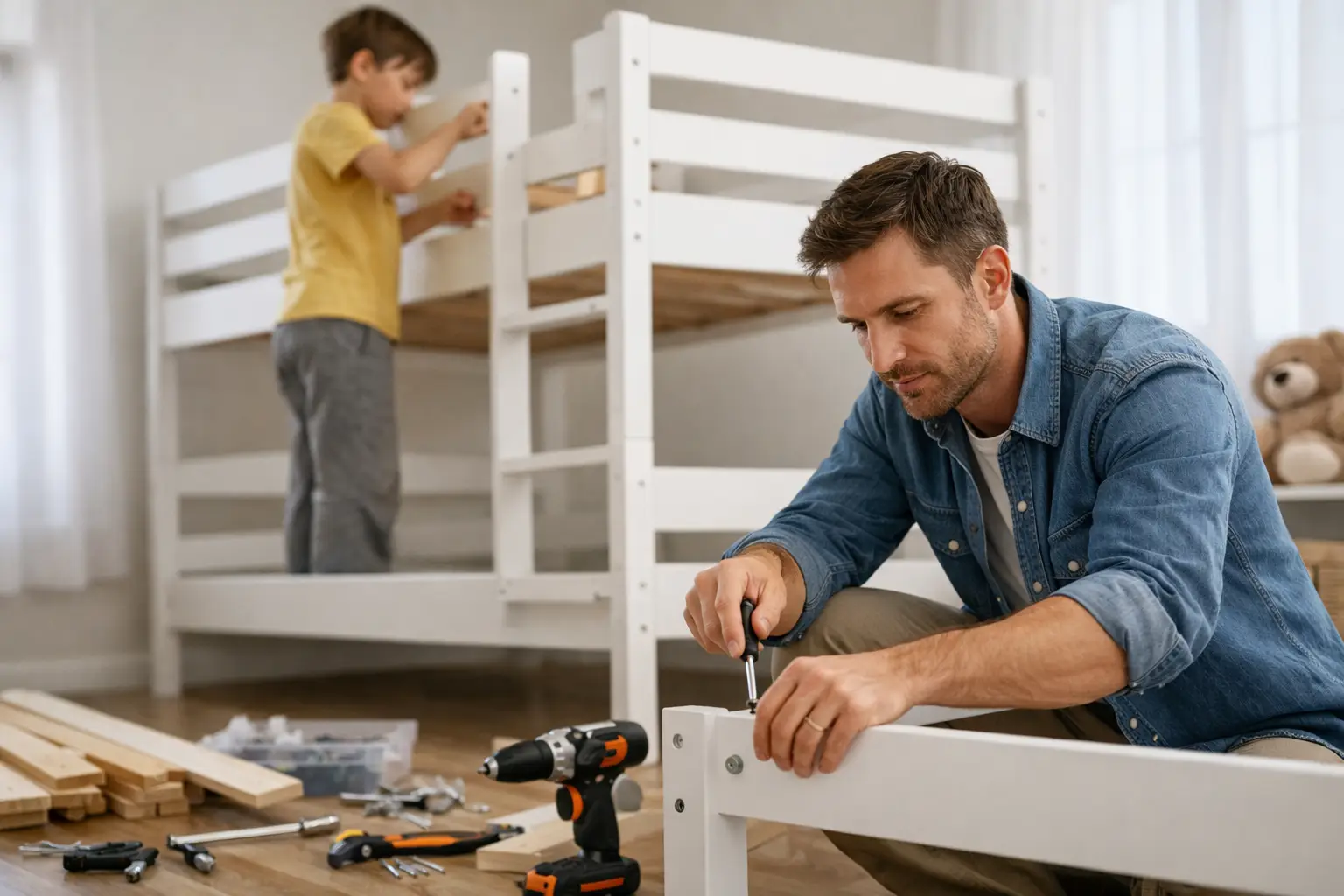
A bunk bed that looks finished can still be one loose bolt away from a problem. That is why knowing how to assemble bunk beds safely matters more than getting the job done fast. In kids’ rooms, guest rooms, and shared spaces, the real goal is not just assembly – it is stability, weight support, and peace of mind every time someone climbs up or rolls over at night.
Bunk beds ask more of the frame than a standard bed. They deal with vertical load, side-to-side movement, climbing impact, and more hardware working together at once. If one step gets rushed, the bed may still stand, but it may not stay secure under everyday use. A careful setup helps prevent wobble, stripped fasteners, rail gaps, and ladder issues that can become safety risks later.
Before you assemble bunk beds safely, check the room
Start with the space, not the box. Measure ceiling height so the top bunk has enough clearance for the sleeper to sit up without hitting the ceiling or fan. A bunk bed placed under a low light fixture or close to a spinning fan creates a hazard no amount of careful assembly can fix.
Look at the wall, outlet locations, window placement, and floor condition. Uneven floors can make an otherwise well-built bunk bed feel unstable. Thick carpet can also hide a slight lean, so once the frame is built, you may need to recheck level and tighten hardware again after the bed settles into place.
It also helps to assemble as close as possible to the final location. Bunk beds are awkward to move once built, and dragging them across the room can loosen joints or stress the frame.
Unpack and inspect every part first
The safest assembly jobs begin with inventory. Lay out the side rails, slats, ladder pieces, guardrails, hardware packs, and instructions before turning a single screw. It sounds basic, but missing washers, swapped bolts, or cracked wood parts are common reasons a project gets forced together the wrong way.
Check for damage from shipping, especially around pre-drilled holes, welds, and corners. If a panel is split or a metal tube is bent, stop there. Forcing damaged parts into place usually creates alignment issues that lead to wobble later.
Keep hardware separated and easy to identify. Many bunk beds include bolts that look almost identical but differ slightly in length. Using the wrong one can poke through a panel, fail to catch enough thread, or tighten unevenly.
Use the right tools – and the right pace
If you want to know how to assemble bunk beds safely, this is one of the biggest differences between a secure setup and a frustrating one. Use the manufacturer-recommended tools whenever possible, and avoid overtightening with a power drill unless the instructions specifically allow it.
Hand-tightening first gives you more control. With bunk beds, alignment matters. If you fully tighten one side too early, the other side may sit crooked, and people often compensate by forcing bolts into place. That can strip threads or put stress on the frame.
A better approach is to loosely connect major structural sections first, then square the frame, then tighten gradually in stages. Think of it as balancing the bed instead of locking it down one corner at a time.
Build the lower structure carefully
The lower frame creates the foundation for everything above it. If the bottom bunk is slightly twisted or out of square, the top bunk will magnify the problem. Take extra time here.
Assemble the end panels and side rails on a clean surface so finishes do not get scratched. Confirm that all rails face the correct direction and that support ledges for slats are where they should be. It is easy to reverse a rail and not notice until much later.
Before tightening, check that the corners sit flush and the frame does not rock. Then install slat supports or platform pieces exactly as directed. Skipping a center support or spacing slats incorrectly can reduce mattress support and change how the weight transfers through the frame.
Guardrails and ladders are not optional details
On bunk beds, safety accessories are structural priorities. The guardrail on the top bunk should be installed exactly where the instructions require, with all included fasteners in place. Never leave off a rail because the bed is against a wall. A wall does not replace a guardrail, and movement during sleep does not stay on one side.
Watch the rail openings too. Gaps that are too wide create risk, especially for younger children. The mattress height matters here as well. Even a properly installed guardrail becomes less protective if the mattress sits too high and reduces the rail height above the sleeping surface.
The ladder needs the same attention. It should sit flush, attach securely, and feel stable under shifting weight. If there is any flex, loosen and realign before retightening. A ladder that feels mostly fine during setup often feels very different when used daily.
How to assemble bunk beds safely with final tightening
Once the full frame is assembled, go back through every connection point in a set order. Tighten hardware from the base upward, alternating sides so pressure stays even. This is the stage where the bed starts to feel truly solid.
Do not confuse tight with overdriven. Wood can split, metal threads can strip, and connection points can weaken if hardware is forced too hard. You want firm, even contact without crushing the material.
After tightening, perform a hands-on stability check. Push gently from multiple directions. Climb the ladder. Apply light weight to the top bunk. Listen for clicks, shifting, or creaks tied to a specific joint. A small sound now is usually easier to fix than after bedding is on and the room is fully set up.
Mattress fit and weight limits matter more than people think
A bunk bed is only as safe as the mattress setup allows. Use the mattress size and maximum thickness recommended by the manufacturer. An oversized mattress can interfere with guardrail protection, while one that is too small may leave unsafe gaps.
Weight limits apply to both bunks and often include the mattress, bedding, and sleeper combined. This gets overlooked in guest rooms, where adults may use a bunk originally purchased for children. If the bed is intended for younger kids only, treat that limit seriously.
The top bunk also comes with age guidance for a reason. In most cases, children under 6 should not use the top bunk. Assembly alone cannot reduce the risk that comes from age, sleep habits, or rough play.
Common mistakes that make bunk beds less safe
Most unsafe bunk beds are not the result of one dramatic error. They come from a few small shortcuts stacking up. Missing a washer, swapping bolts, tightening too early, using the wrong mattress height, or skipping a final inspection can all affect long-term stability.
Another common issue is assuming the job is finished once the bed is standing. Bunk beds should be rechecked after a few days of use. Hardware can settle, especially on carpet or after the frame has handled real movement for the first time.
If the bed will be used by active kids, regular maintenance matters. Check bolts, ladder attachment, slat position, and rail firmness every so often. A safe assembly should lead into safe ownership.
When it makes sense to call for help
Some furniture projects are forgiving. Bunk beds are not high on that list. If the instructions are unclear, the parts are heavy, the room is tight, or the frame includes a desk, trundle, storage stairs, or metal-and-wood hybrid construction, professional assembly can save time and reduce risk.
That is especially true for busy parents, new movers, and anyone furnishing multiple rooms at once. A stress-free setup is not just about convenience. It means the bed is assembled with attention to level, hardware fit, guardrail placement, and final stability instead of getting squeezed in late at night after a long day.
For homeowners and renters who would rather skip the guesswork, Smart Solutions TX helps take the pressure off with careful in-home furniture assembly designed to make setup secure and straightforward.
A bunk bed should feel solid the first night, not become a project you keep meaning to revisit. If you slow down, follow the build order, and treat every rail, bolt, and weight limit as part of the safety system, you give the room something better than a finished look – you give it a setup people can trust.