

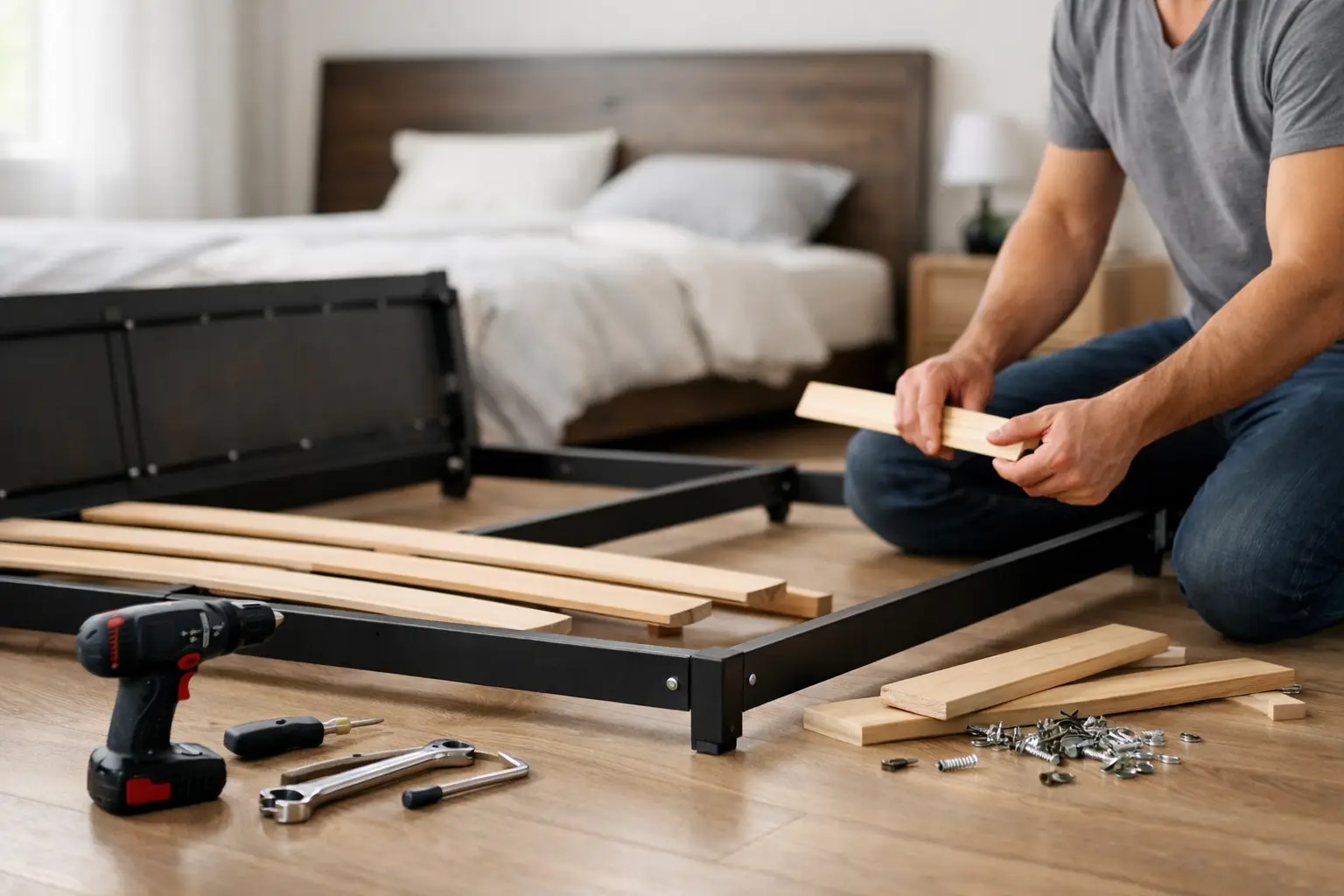
You finally get the boxes into the bedroom, clear a little floor space, and open the instructions – then the real question hits: how long does it take to assemble a bed frame? The short answer is usually 30 minutes to 2 hours, but the real timeline depends on the frame style, the number of parts, the quality of the instructions, and whether everything arrives intact. If you are trying to plan a move-in day or finish a room without losing half your evening, those details matter.
How long does it take to assemble a bed frame in real life?
For a basic metal platform frame, assembly often takes 30 to 60 minutes. A simple wood frame with a headboard usually lands closer to 1 to 2 hours. If you are dealing with a storage bed, upholstered frame, bunk bed, or anything with drawers, slats, lifting mechanisms, or multiple boxes, the job can stretch to 2 to 4 hours.
That range gets even wider if you are assembling the frame alone. Two people can cut the time down quite a bit, especially when the frame is bulky or the headboard needs to be held in place while hardware is tightened. What feels like a quick setup in a product listing can turn into a longer project once you are sorting bolts, matching panels, and making sure the frame is level and secure.
For most homeowners and renters, the best way to think about timing is this: a straightforward frame is usually a same-evening task, while a larger or more detailed frame may take a full afternoon.
What affects how long it takes to assemble a bed frame?
The biggest factor is the type of bed frame you bought. A no-frills metal frame with a few locking pieces is very different from a full bedroom set with a tufted headboard, side rails, center supports, slats, and under-bed storage. The more features the frame has, the more hardware, alignment, and fine-tuning it usually requires.
Instructions also make a bigger difference than most people expect. Some manufacturers do a solid job with labeled parts and clear diagrams. Others leave out key steps, use tiny illustrations, or package similar-looking hardware together in ways that slow everything down. Even experienced DIYers lose time when they have to stop and second-guess the next move.
Your workspace matters too. If the room is tight, already partly furnished, or still full of moving boxes, assembly takes longer. It is harder to lay out parts, turn large panels, and move around the frame safely. On move-in day, that can be the difference between a 45-minute setup and a two-hour project.
Then there is the condition of the package itself. Missing hardware, warped pieces, or damaged corners can stop the job almost immediately. Even if the frame is usable, small manufacturing issues can create alignment problems that add time and frustration.
Typical bed frame assembly times by type
A standard metal bed frame is usually the fastest option. These frames often use fewer components and simpler connections, so they can be assembled in under an hour. If the pieces are well labeled and the room is clear, some people finish in 20 to 30 minutes.
A basic wooden platform bed generally takes longer. You are often attaching side rails, center supports, wooden slats, and sometimes a headboard. For most people, that means 60 to 90 minutes if everything goes smoothly.
An upholstered bed frame usually adds time because the pieces are larger and heavier, and the fabric-covered parts need to be handled carefully to avoid scuffs or tears. Expect around 1.5 to 2.5 hours in many cases.
Storage beds are one of the more time-consuming options. Drawers, lift-up platforms, and extra support pieces add complexity. These can easily take 2 to 4 hours, especially if the frame comes in several boxes and the instructions are more involved.
Bunk beds and loft beds often take the longest because safety is a bigger concern. Every ladder, rail, and support piece needs to be installed correctly and tightened properly. Even for a careful assembler, 2 to 4 hours is common.
Why DIY assembly often takes longer than expected
Most people do not lose time on the main steps. They lose time on the small interruptions. Opening boxes without damaging parts, laying everything out, checking the parts list, finding a missing Allen key, moving packaging out of the way, and backtracking after one panel goes on backward can add up fast.
There is also the issue of over-tightening too early. That is one of the most common mistakes with bed frame assembly. If all the bolts are tightened before the frame is fully aligned, some holes may not line up later. Then you end up loosening parts and redoing work that already felt finished.
Another delay comes from weight and balance. Headboards, footboards, and upholstered side panels can be awkward to hold steady alone. This is where a simple step turns into a stop-and-start process, especially if you are trying to protect walls, flooring, and the frame finish at the same time.
For busy households, interruptions are part of the timeline too. Kids need attention, a work call comes in, dinner has to happen, and a one-hour assembly job gets stretched across the whole evening.
How to make bed frame assembly faster
A little setup before you start can save a lot of time. Clear the room as much as possible and leave enough space to lay out parts flat. Keep the instruction manual nearby, and sort hardware into small groups before the first bolt goes in. That one step alone makes the process much more predictable.
If the frame is large, have a second person available for lifting and positioning. You do not need a full crew, but an extra set of hands during the tricky steps can keep the job moving and reduce the chance of scratches or misalignment.
It also helps to use the right tools. Many frames include a basic Allen wrench, but that does not always make for a fast or comfortable assembly. A better hand tool set can speed things up, though power tools should be used carefully. It is easy to strip hardware or overtighten bolts if you rush.
Most importantly, do not treat the final tightening as the first step. Get the frame loosely assembled, confirm everything is square and level, then tighten the hardware in stages.
When hiring help makes more sense
If you just moved, are furnishing multiple rooms, or need the bed ready the same day, hiring assembly help can be the less stressful option. That is especially true for larger frames, storage beds, bunk beds, and anything heavy enough to be awkward or risky to manage alone.
Professional assembly is not just about saving time. It also helps reduce wear on the frame, damage to walls and floors, and the frustration that comes from unclear instructions. A properly assembled bed should feel stable, quiet, and secure from the first night.
For many people, the real value is predictability. Instead of wondering whether the project will take 45 minutes or your entire Saturday, you get a clear outcome and a finished room. That is often worth it on its own, especially during a move or a busy week.
In Austin and Central Texas, this is one of those home setup tasks that sounds simple until it is sitting in boxes on your floor. If your goal is a stress-free setup with less guesswork, Smart Solutions TX can take it off your list and help you get the room functional faster.
So, how long does it take to assemble a bed frame for most people?
If you want the most practical answer, plan for about an hour for a simple frame, around two hours for a more detailed setup, and longer for storage or bunk-style beds. If everything is organized, the instructions are clear, and you have help, it can move quickly. If the room is crowded, the parts are heavy, or the directions are poor, it can take much longer than expected.
A bed frame is one of the first things people want set up after a move because it changes how the whole home feels. Once the bed is in place, the room starts working again. If you are deciding whether to do it yourself or hand it off, the best choice is the one that gets you to that finished, solid, ready-to-sleep result without adding more stress to your day.