

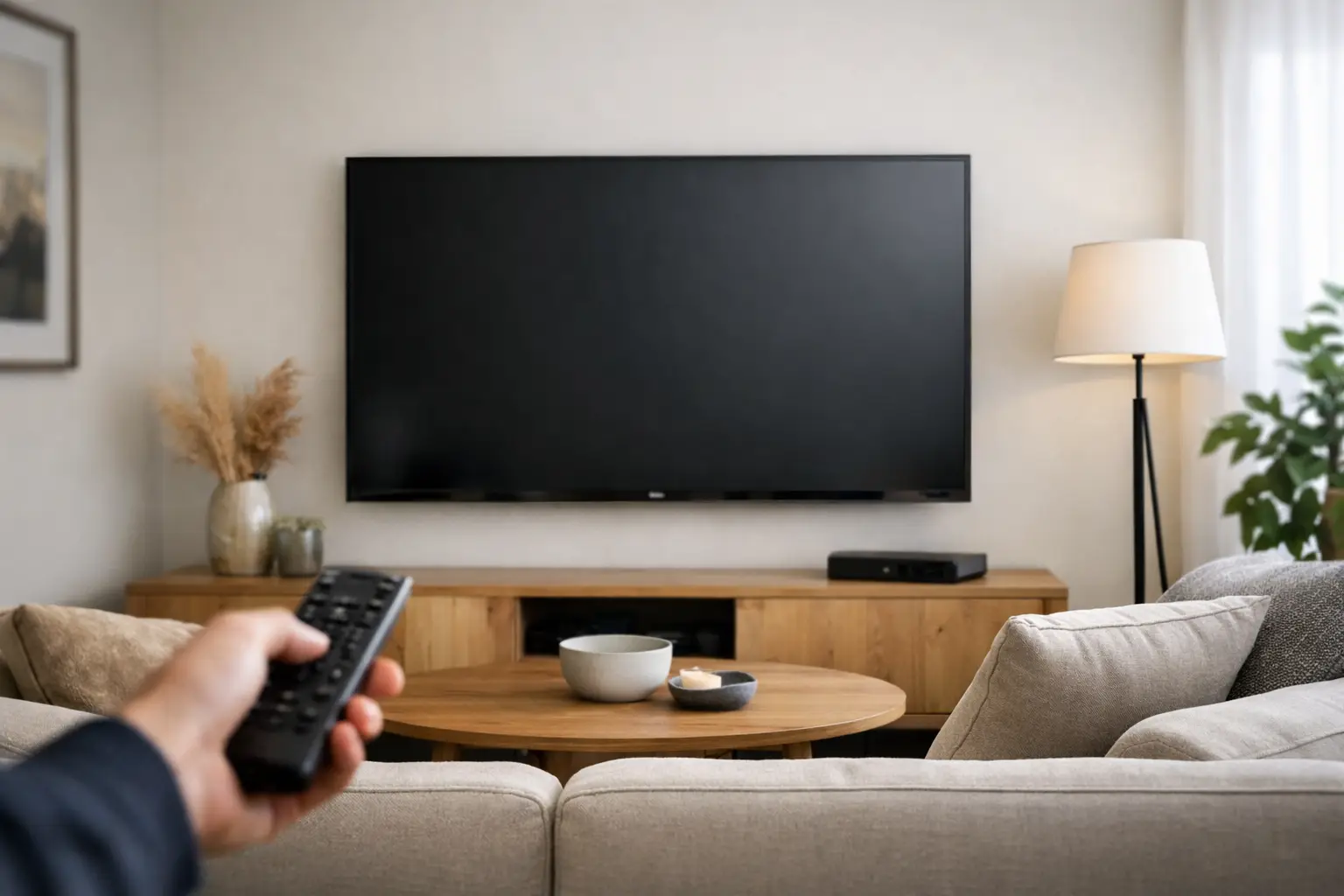
A TV that looks great on the wall can still feel wrong the second you sit down. If your neck tilts up, the picture seems off-center, or movie night somehow feels less comfortable than it should, the issue is often placement – not the TV itself. Finding the best tv height for living room comfort comes down to where your eyes naturally land when you’re seated, how your furniture is arranged, and how the room is actually used day to day.
For most living rooms, the center of the screen should sit at or close to seated eye level. That usually lands somewhere around 42 to 48 inches from the floor to the center of the TV, but “usually” does a lot of work here. A low modern sofa, a deep recliner, or a fireplace wall can shift that number in either direction.
What is the best TV height for living room comfort?
The simplest rule is this: when you’re sitting in your main viewing spot, your eyes should meet the middle third of the screen without you needing to lift your chin. That creates a more relaxed viewing angle and helps reduce neck strain during longer watching sessions.
In a standard setup, that means the TV is often lower than people expect. Many homeowners picture the screen as a wall feature first and a viewing surface second, so they mount it too high. It may look balanced above a console, but if your eyes are hitting the bottom edge of the screen instead of the center, the placement is probably off.
A good starting point is to measure your seated eye height from the floor. In many living rooms, that falls around 40 to 44 inches. From there, line up that measurement with the center of the TV or just slightly below center if you prefer a more relaxed angle for reclining seating.
Why TVs are often mounted too high
The most common reason is aesthetics. People want the TV to fill empty wall space, sit above furniture, or clear a soundbar and decor. Those goals make sense, but comfort still has to come first if this is the screen your family uses every day.
The second issue is copying layouts from photos. A living room in a showroom or real estate listing may look polished, but it isn’t always designed for real viewing habits. In actual homes, the best setup accounts for where people sit, how far they are from the screen, and whether kids, guests, or multiple seating positions are part of the picture.
There is also a practical concern with fireplaces. Mounting above a fireplace is common, but it often forces the TV much higher than ideal. If that’s the only wall that works, the setup may still be worth it, but it’s a trade-off. You gain a clean focal point and save space, but you usually give up some comfort.
How to calculate the right mounting height
You don’t need a complicated formula to get close. Start with three measurements: your seated eye height, the height of the TV itself, and the distance from the floor to any furniture below it.
First, sit where you normally watch and measure from the floor to your eyes. Next, divide the TV’s height by two to find its center point. Then position the mount so the center of the screen lands near your seated eye height.
For example, if your seated eye height is 42 inches and your TV is 28 inches tall, the center of the TV is 14 inches from the top or bottom edge. That means the bottom of the TV would sit about 28 inches from the floor if the center is at 42 inches. Depending on your media console, soundbar, or outlet placement, you may raise it slightly, but large adjustments tend to show up fast when you sit down.
Screen size changes the feel
Larger TVs don’t always need to be mounted much higher. That’s a common misconception. What changes with a bigger screen is how much image extends above and below your eye line. As long as the center point is still close to seated eye level, the viewing experience can remain comfortable.
That said, oversized screens in compact rooms can feel dominant if they sit too low. In those cases, a slight height increase may help the setup feel more balanced without pushing the angle into uncomfortable territory.
Viewing distance matters too
If your sofa sits farther back, you have more flexibility. A screen mounted a bit higher may still feel fine because your upward viewing angle is softer at a distance. In tighter living rooms where the seating is close, even a few extra inches too high can become noticeable.
This is why one “perfect” number doesn’t work for every home. The best tv height for living room layouts depends on the full setup, not just the wall.
Best TV height for living room setups by room type
Open-concept living rooms often need a balanced approach because the TV shares attention with dining or kitchen areas. In these spaces, homeowners sometimes favor a slightly higher mount for visibility across the room. That can work, as long as the main seating area still has a comfortable line of sight.
In smaller apartments or condos, the TV is often viewed from one primary sofa, so comfort should lead the decision. These rooms usually benefit from lower, more eye-level mounting, especially when the seating is close.
Family living rooms with sectionals, recliners, or floor seating need a little more flexibility. If one side of the room reclines and the other sits upright, it helps to prioritize the most-used seat rather than trying to make every angle perfect. Good placement is about reducing strain for everyday viewing, not chasing visual symmetry from every corner.
What about mounting above furniture?
A console table, media cabinet, or soundbar can affect placement, but they should not completely dictate it. You want enough breathing room so the setup doesn’t feel cramped, yet not so much empty space that the TV starts climbing the wall.
A practical guideline is to leave several inches between the bottom of the TV and the top of the furniture below. Often 4 to 8 inches works well, depending on the look you’re after and whether accessories need space. If maintaining that gap forces the TV much higher than eye level, it may be worth rethinking the furniture height rather than compromising the viewing experience.
When a higher mount makes sense
Sometimes function wins. In homes with toddlers, active pets, or unusually low furniture, mounting the TV a bit higher can add peace of mind. It may also help in rooms where people watch while standing in the kitchen or moving around during gatherings.
The key is being honest about how the room is used most often. If the TV is mainly for long evening viewing sessions from the couch, comfort should carry more weight than occasional visibility while walking around. If the room does double duty for entertaining, a slight compromise may be reasonable.
Common mistakes to avoid
One mistake is measuring from the top or bottom of the screen instead of the center. Since TVs vary so much in size, edge-based measurements can throw off the whole placement.
Another is guessing before the furniture is in place. If you mount the TV before the sofa arrives or before the room layout is settled, you’re making a permanent decision without the most important reference point.
A third is ignoring wall type and stud placement. Even perfect height means very little if the mount is not secure. Drywall, brick, stone, and metal studs all require different hardware and approach. This is where a stress-free installation matters most, because protecting the wall and securing the screen is just as important as getting the height right.
A better result starts before the drill comes out
Tape the TV outline on the wall before mounting. Sit down, look at it from your normal spot, and check how your neck feels after a few minutes. This quick step catches a lot of regret early.
If you’re between two heights, choose the lower one more often than not. Most living rooms are more comfortable with a TV that feels slightly low than one that feels obviously high. And if the wall has obstacles like a fireplace, outlets, or a narrow stud layout, it helps to have an experienced installer look at the full picture before making the final call.
At Smart Solutions TX, this is exactly the kind of detail that turns a basic wall mount into a setup that actually feels right every day. The best placement is not just about measurements on paper – it’s about making your living room easier to enjoy the moment everything is switched on.
If you’re deciding where the screen should go, trust what your body tells you when you sit down. A TV mounted at the right height disappears into the room in the best way – comfortable, natural, and one less thing to think about.