

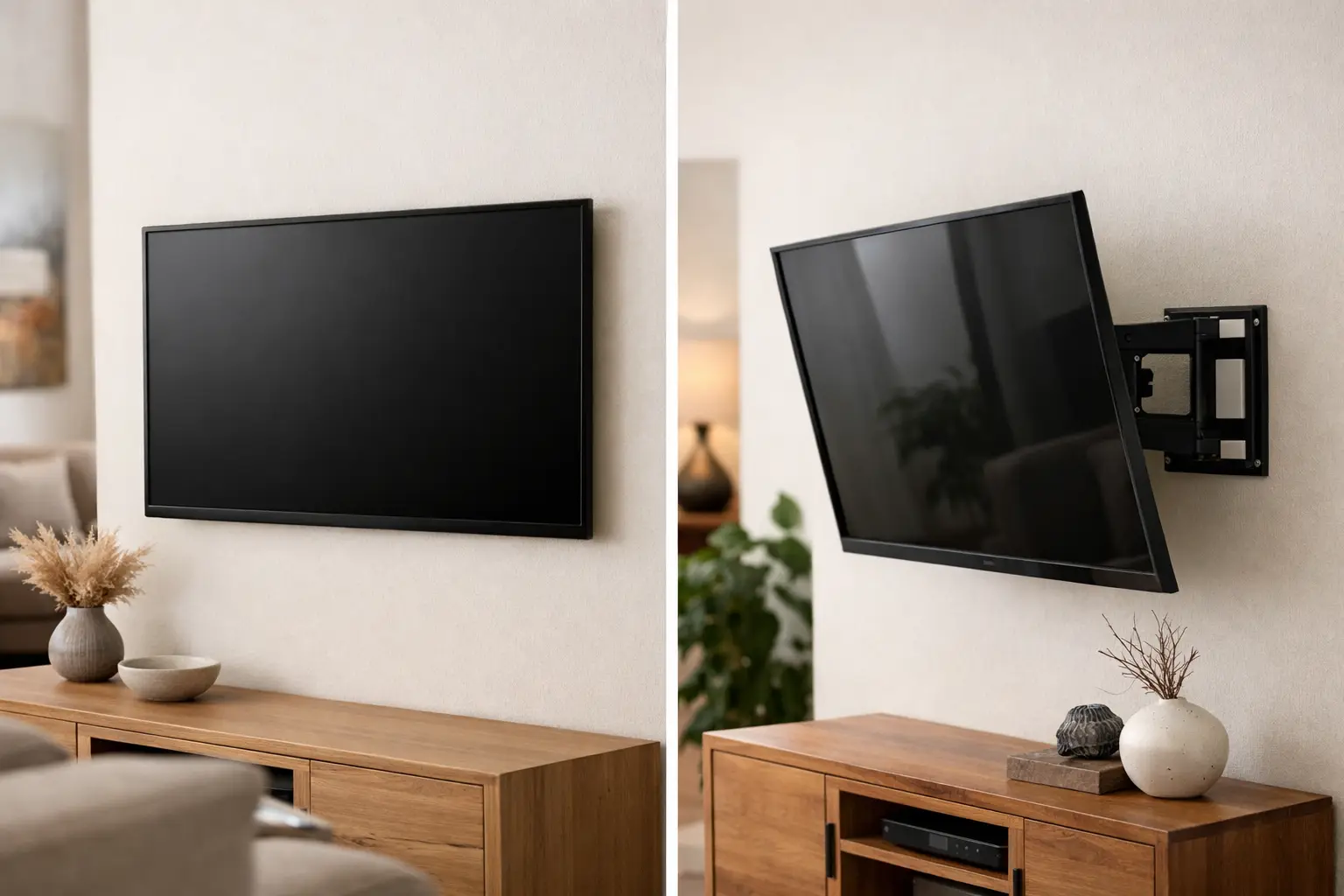
A TV mounted in the wrong position becomes obvious fast. You may be craning your neck from the couch, fighting glare during the afternoon, or wishing you could turn the screen toward the kitchen. When comparing a fixed TV mount vs swivel option, the right choice comes down to how you use the room, where you sit, and what is behind the wall.
A wall-mounted TV can make a living room, bedroom, apartment, or game room feel cleaner and more comfortable. But the mount itself does more than hold the screen up. It determines your viewing angle, how close the TV sits to the wall, and how much flexibility you have after installation. Choosing carefully before the TV goes on the wall helps prevent a frustrating do-over later.
What Is a Fixed TV Mount?
A fixed TV mount holds the television flat and close to the wall. Once it is installed, the TV stays in one position with little or no adjustment. This is the simplest type of mount, and it is a dependable choice when your main seating area sits directly in front of the screen.
For many homeowners, that clean, low-profile look is the biggest advantage. A fixed mount keeps the television close to the wall, which can make a room feel more organized and reduce the visual bulk of a large screen. It is especially popular above a media console, in a bedroom where the bed faces the wall, or in a dedicated viewing room with one clear seating position.
Fixed mounts generally have fewer moving parts than swivel mounts. That can make them a practical, budget-friendly option for a TV that will not need frequent adjustment. They are also useful where wall space is limited, since the screen does not need room to extend or turn.
The trade-off is simple: your viewing angle is set. If you move to a chair off to the side, sit at the dining table, or want to watch from an adjoining kitchen, the picture may not look as clear or comfortable. Depending on the mount style, reaching cables and ports behind the TV can also take more planning.
What Is a Swivel TV Mount?
A swivel TV mount, often called a full-motion mount, allows the television to move away from the wall and turn left or right. Many models also tilt up or down. That added range makes it easier to aim the screen toward different seats and reduce glare from windows or lights.
This style works well in open-concept homes, multipurpose rooms, and bedrooms with seating that is not centered on the TV. If you want to watch the game from the couch, turn the screen toward the kitchen while cooking, then angle it back for movie night, a swivel mount gives you that flexibility.
A full-motion mount can also be helpful when a television must be mounted in a corner or on a wall that is not directly opposite the main seating area. Rather than settling for an awkward angle, you can position the screen for a better view when you need it.
That flexibility comes with a few considerations. Swivel mounts extend farther from the wall, so they have a more noticeable profile when fully opened. They also place more leverage on the mounting points, particularly with larger TVs. Proper hardware, accurate stud placement, and a mount rated for your television’s size and weight are essential for a secure installation.
Fixed TV Mount vs Swivel: The Everyday Differences
The decision is not about which mount is better overall. It is about which one solves the problem in your room.
A fixed mount is usually the better fit when your television will be viewed from one primary location. Think of a family room where the sofa faces the TV, a guest bedroom, or a home office where you watch from one desk. You get a neat installation, a close-to-wall finish, and a screen that stays exactly where it belongs.
A swivel mount is usually worth considering when you have more than one viewing zone. Open living and dining spaces are a common example. So are rooms with an off-center fireplace, corner walls, large windows, or a sectional that wraps around the room. The ability to adjust the screen can make a big difference in comfort.
Glare is another deciding factor. A fixed mount may work perfectly if the room has consistent lighting and limited reflections. If sunlight shifts across the wall during the day, a swivel mount with tilt can give you more control. Before choosing, notice where daylight hits the room at the times you are most likely to watch TV.
Consider the Wall Before Choosing the Mount
The wall is just as important as the television. A secure installation depends on the wall material, the location of framing, the size of the TV, and the mount’s weight rating. Mounting into studs is typically the preferred approach for a strong, reliable hold, especially for large screens and full-motion mounts.
Not every wall is straightforward. Drywall alone, metal studs, brick, concrete, and walls above fireplaces may require a different approach. There may also be electrical wiring, plumbing, ductwork, or a recessed box behind the intended mounting area. A professional assessment helps avoid damage and ensures the TV is supported correctly.
Swivel mounts deserve extra attention here because the TV moves outward from the wall. When the arm extends, the mount and wall support more force than they would with a TV resting flat against the wall. That does not mean a swivel mount is unsafe. It means the installation needs to be precise, with the right mount and the right hardware for the job.
TV Size, Height, and Cable Access Matter Too
A bigger screen does not automatically require a fixed mount, but it does make the mounting details more significant. Check the mount’s listed weight capacity and compatible TV size range. Your television’s VESA pattern, which is the bolt-hole pattern on the back of the TV, must also match the mount.
Viewing height is equally important. In most living rooms, a comfortable setup places the center of the screen near seated eye level. Mounting too high can cause neck strain, even if the TV looks visually balanced on the wall. This is why TVs installed above fireplaces often benefit from careful height planning and, in some cases, a mount that tilts downward.
Think about cables before the TV is mounted. Fixed mounts can leave less room to access HDMI ports, power connections, streaming devices, and soundbar wiring. A swivel mount may provide easier access because it can extend outward, but cables still need enough slack to move safely without pulling or showing. Planning the connections in advance creates a cleaner finished look.
When a Fixed Mount Is the Smart Choice
Choose a fixed mount if you want a streamlined look and have a straightforward room layout. It is ideal for a TV that will stay centered in front of the main seating area, particularly when you do not need to reach behind the screen often.
It can also be the right call for renters or homeowners who want a simple setup with minimal projection from the wall. While any wall installation should be planned carefully, a fixed mount often makes sense when the goal is a clean, permanent viewing position without extra movement.
When a Swivel Mount Is Worth It
Choose a swivel mount when convenience depends on flexibility. If the TV needs to serve the living room and kitchen, face different sections of a large room, or compensate for an off-center wall, the ability to reposition it can be valuable every day.
It is also a strong option for families. One person may want the television aimed toward the sofa while another is folding laundry or preparing dinner nearby. Instead of compromising on where the TV faces, a full-motion mount lets the screen work with the room.
Just be realistic about the space. If the television sits in a narrow walkway or near a door, an extended swivel arm could become inconvenient. Measure the area and consider how far the TV will project when turned.
Get the Mount and Installation Right the First Time
A TV mount should feel like a permanent improvement, not a source of worry. The right mount needs to fit your room, your television, and your viewing habits. The installation needs to account for studs, wall conditions, cables, height, and the TV’s weight.
For busy homeowners and renters in Austin and Central Texas, Smart Solutions TX can handle the mounting details with careful, in-home service from vetted technicians. A secure installation means you can settle into your space with confidence instead of spending the evening second-guessing the wall anchors.
Before booking or buying a mount, stand in each place you expect to watch. If every seat faces one wall, a fixed mount may give you the clean result you want. If your room asks the TV to do more, a swivel mount can make the whole space more comfortable from day one.