

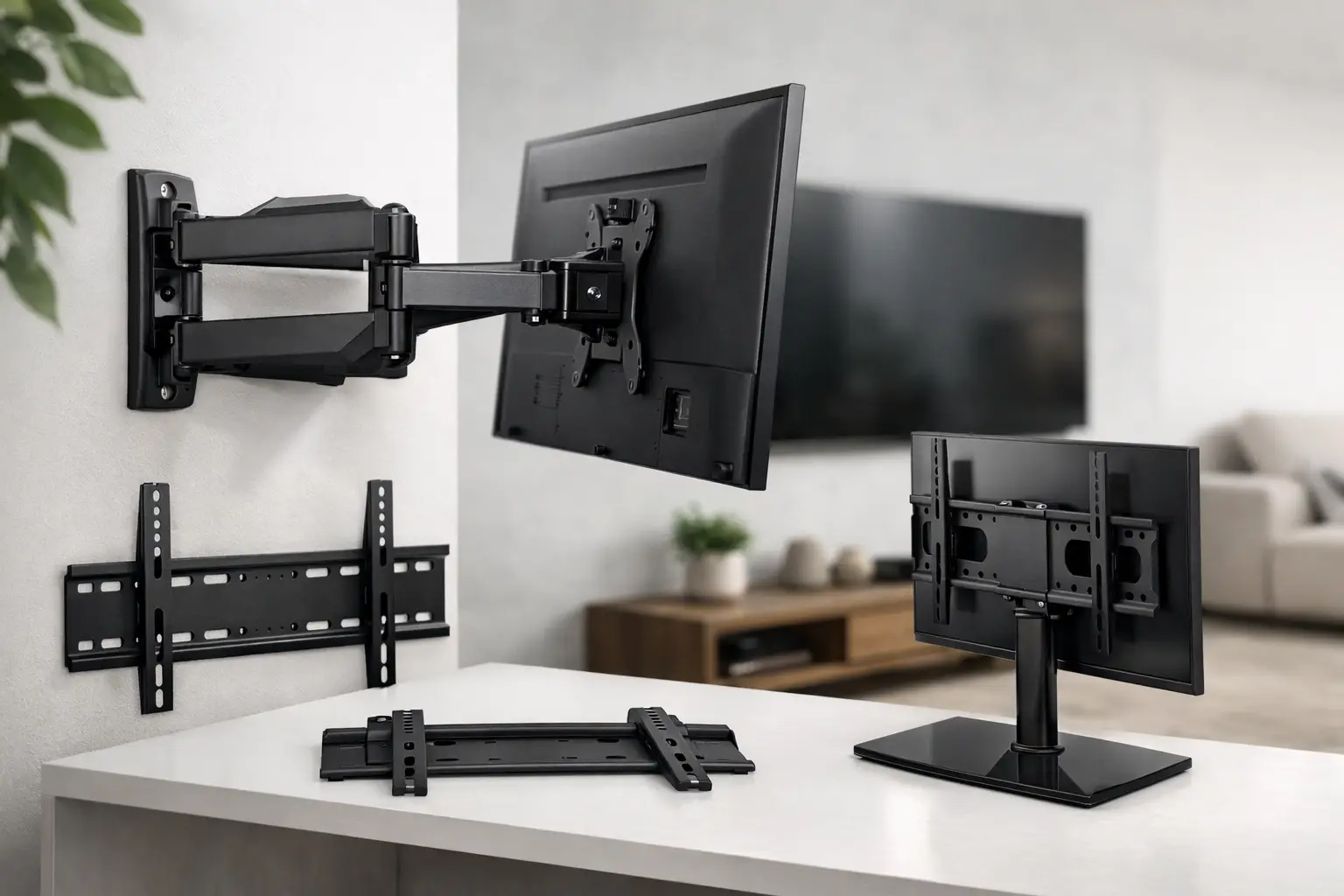
A television can look perfectly placed until you sit down and notice glare from the windows, a strained viewing angle, or a screen that cannot be reached when you need a new cable. This tv mount types review helps you choose a mount based on how your room actually works, not just what looks good on the box.
For busy homeowners, renters, and new Central Texas residents, the right choice comes down to three things: where you watch, where the TV will be installed, and how much movement you need after installation. A secure mount should support the television’s size and weight, attach properly to the wall structure, and leave you with a comfortable screen position for everyday use.
TV Mount Types Review: The Main Options
Fixed mounts: clean, close-to-wall placement
A fixed TV mount holds the screen flat and close to the wall. It is the simplest option and often the most affordable, making it a strong fit for a living room, bedroom, or media wall where viewers sit directly in front of the TV.
The biggest benefit is its low profile. A fixed mount gives the room a polished look and keeps the television from projecting far into a walkway. Since it has no moving arm or adjustment mechanism, it is also a practical choice when you already know the ideal viewing height and do not expect to change it.
The trade-off is access. Once the television is on the wall, reaching HDMI ports, power connections, or streaming devices behind it can be difficult. Fixed mounts also do not help with glare or off-center seating. If your furniture layout is stable and the screen will be at eye level, this is usually all you need.
Tilting mounts: a smart answer for higher screens
A tilting mount allows the TV to angle downward, usually by a limited range. This option is especially useful when the screen must be mounted higher than ideal, such as above a dresser, in a bedroom, or over a fireplace.
Tilting the screen down can make a high-mounted TV more comfortable to watch and may reduce reflections from overhead lighting or nearby windows. It also creates more room behind the screen for connecting cables than many fixed mounts.
Still, a tilt mount only moves up and down. It will not turn toward a kitchen island, a side chair, or a neighboring room. It is best for a space where everyone generally watches from the same direction but the installation height calls for extra adjustment.
Full-motion mounts: flexibility for active rooms
A full-motion mount, also called an articulating mount, lets the TV extend away from the wall, swivel left or right, and tilt. For rooms with multiple seating areas or frequent glare issues, it is often the most adaptable choice.
This mount works well in open-concept homes where you may want to turn the screen toward the sofa for movie night and toward the dining area during a game. It can also help when the best structural mounting location is slightly off-center from your preferred viewing position. The ability to pull the TV forward makes cable access easier, too.
That flexibility comes with a few considerations. Full-motion mounts extend the TV farther from the wall and put more leverage on the mounting points, so proper installation into studs or another approved structural surface matters. Larger televisions may require a heavier-duty mount, and the arm needs enough clearance to move without hitting a wall, cabinet, or fireplace surround. A professional can help confirm that the mount, TV, wall, and desired range of motion all work together safely.
Ceiling mounts: useful when walls are not an option
Ceiling mounts attach to a ceiling joist or other suitable ceiling structure and suspend the television below it. They are less common in a typical living room, but they can be an excellent solution in lofts, rooms with extensive windows, commercial-style spaces, garages, home gyms, or areas where a wall cannot support the desired TV placement.
Many ceiling mounts allow tilt and swivel, which helps direct the screen toward the viewing area. Some include a drop pole that can be selected or adjusted for the ceiling height.
The installation must be planned carefully. Ceiling materials, joist direction, fan clearance, viewing height, and cable routing all affect the final result. A TV placed too low becomes an obstacle; one placed too high can be uncomfortable to watch. Ceiling mounting is not a shortcut for an uncertain wall installation. It is a specialized solution when the room layout genuinely calls for it.
Corner mounts: make overlooked space work harder
A corner TV mount is designed to place the screen across or near a room corner. Depending on the mount style, it may use an articulating arm that extends and angles the TV into position. It can be helpful in smaller rooms, bedrooms, apartments, or living spaces where the center wall is blocked by windows, doors, built-ins, or a fireplace.
Corner mounting can free up a main wall for furniture or artwork while still providing a clear viewing angle. It often works best with a full-motion design, since the screen needs to be positioned precisely for the seating area.
Before choosing this route, consider whether the TV can sit at a comfortable height and whether the corner location allows for easy cable management. The goal is to create a useful focal point, not to force the television into the only empty space available.
How to Choose the Right TV Mount Type
Start with your normal viewing position. Ideally, the center of the TV screen should be close to seated eye level. In real homes, furniture, fireplaces, windows, and room proportions sometimes make that impossible, which is where a tilting or full-motion mount can improve comfort.
Next, think about who watches and from where. A fixed mount makes sense for a dedicated TV wall and one main couch. If family members watch from a sectional, kitchen, or adjacent sitting area, a swivel-capable full-motion mount may be worth the added cost. For a bedroom TV mounted above a dresser, a tilt mount often delivers the right balance of clean placement and comfortable viewing.
Then verify the practical details before installation. Every mount has a stated TV size range, weight capacity, and VESA pattern compatibility. The VESA pattern is the spacing of the mounting holes on the back of the television. Your mount must match that pattern, and its weight rating must exceed the TV’s actual weight.
Wall construction is just as important. Wood studs provide a dependable mounting point in many homes. Metal studs, masonry, brick, tile, plaster, and drywall each require different planning and hardware. Drywall alone is generally not a safe support point for a TV mount, particularly for large screens or articulating arms. If you are renting, check your lease requirements before any wall installation and keep in mind that patching may be needed when you move out.
Do Not Let Cables Decide the Installation
A great mount can still leave a disappointing finish if power and cables are treated as an afterthought. Consider where the outlet sits, how streaming devices or soundbars will connect, and whether you want cables visible or neatly managed. A full-motion mount needs cable slack for extension and swiveling, while a fixed mount needs connections that fit in the limited space behind the screen.
If you plan to add a soundbar, make sure it will not block the TV’s sensors or interfere with the mount’s movement. Fireplace installations also deserve extra care. Beyond viewing height, heat exposure and the construction behind the surface should be evaluated before mounting a television there.
When Professional Installation Is Worth It
A TV mount can look simple until you are locating studs, checking level, managing cords, lifting a large screen, and hoping the selected hardware is right for the wall. The risk is not only cosmetic. An improperly secured television can damage the wall, the TV, nearby furniture, or someone in the room.
Smart Solutions TX provides careful, in-home TV mounting for customers who want the job handled with confidence. Background-checked technicians, a 90-day service guarantee, and a customer-first approach help take the uncertainty out of setting up a new space. Whether you need a clean fixed mount or a carefully positioned full-motion installation, booking professional help can save time and protect the items you rely on every day.
Choose the mount that serves the way you live, then give it the secure installation it deserves. The best TV setup is the one you stop thinking about because every seat has a clear, comfortable view.