

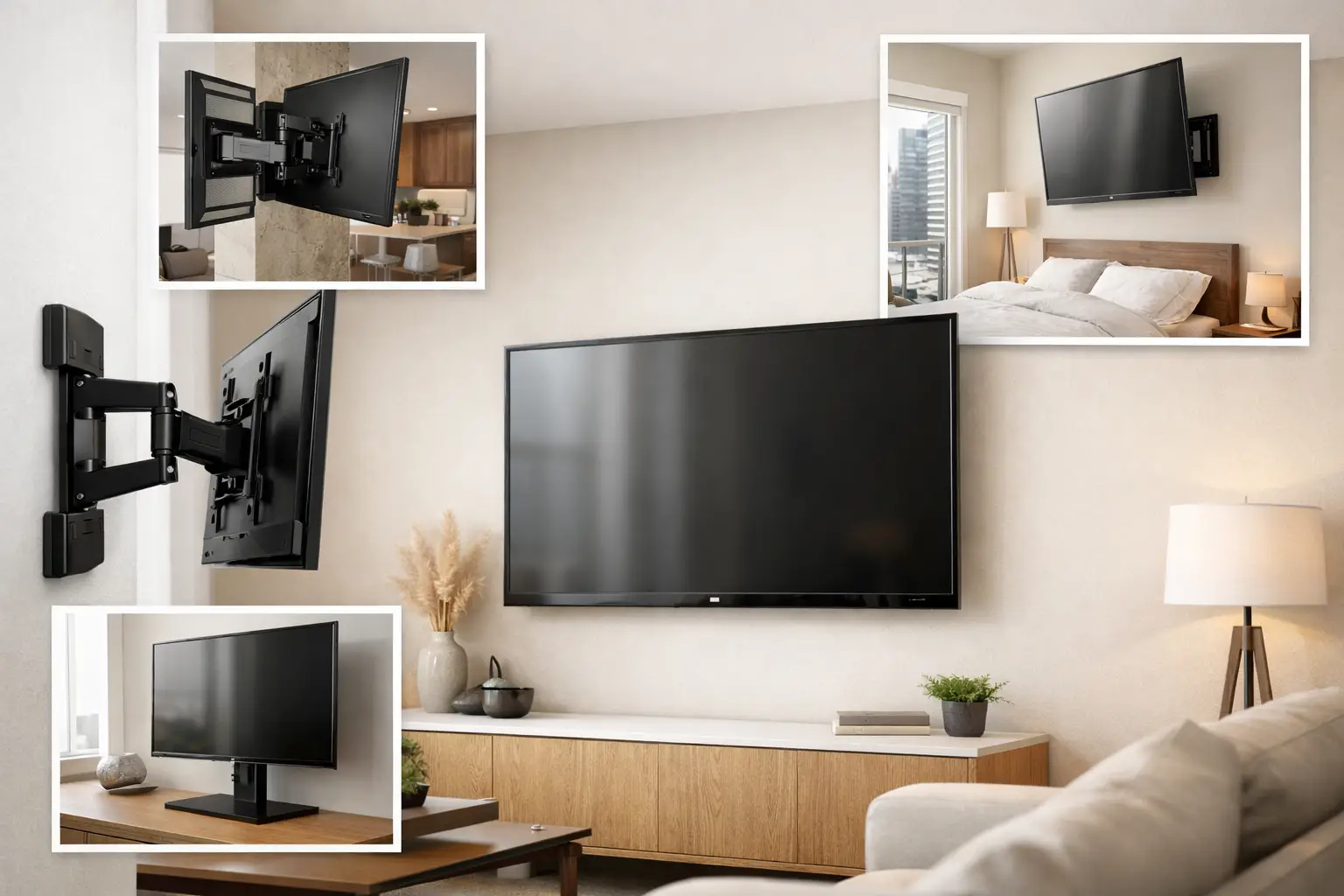
Apartment living changes the rules fast. One wall is perfect for movie night, the next hides metal studs, concrete, or a lease clause that makes you think twice about drilling anything. That is why choosing the best tv mounts for apartments is less about buying the fanciest bracket and more about finding the safest, smartest fit for your space.
If you are renting, the right mount needs to do three things well: hold your TV securely, work with your wall type, and keep move-out stress to a minimum. A mount that looks great online can still be the wrong choice if it pulls too far from the wall, needs oversized lag bolts, or forces your TV into an awkward corner. The goal is simple – a clean setup you can trust every day.
What makes the best TV mounts for apartments different?
In a house, you usually have more freedom to open walls, anchor deeply, and patch later. In an apartment, every decision comes with trade-offs. You may be working with limited wall space, stricter lease rules, shared walls, or a living room that also functions as an office or play area.
That means the best apartment TV mount is usually one that keeps the profile clean, puts less stress on the wall, and avoids overcomplicating the install. Full-motion mounts sound appealing, and sometimes they are the right call, but they place more leverage on the mounting points. In a rental, a low-profile fixed mount or a slim tilting mount is often the more practical choice.
You also need to think about what happens later. If you plan to move in a year, a mount that leaves fewer, smaller repair points may save time and money when it is time to patch and paint.
1. Fixed low-profile mounts
For many renters, this is the safest bet. A fixed low-profile mount holds the TV close to the wall and does not extend or swivel. That simple design is a big advantage in apartments because it reduces strain on the anchors and keeps the setup neat in tighter rooms.
Fixed mounts work best when your seating area is directly in front of the screen and you already know the viewing height is right. The trade-off is flexibility. If glare becomes an issue or you want to angle the screen toward a dining area, you will not have much room to adjust.
Still, if you want a secure, streamlined setup without adding unnecessary wall stress, this style is hard to beat.
2. Tilting mounts
A tilting mount is often the sweet spot between clean looks and useful flexibility. It sits fairly close to the wall but gives you enough movement to angle the TV down slightly, which helps when the screen is mounted a bit higher than ideal.
This is a smart option for bedrooms, apartments with fireplaces, or living rooms where furniture placement is limited. You get a cleaner look than a full-motion mount and more viewing comfort than a fixed bracket. For many people, especially in smaller apartments, this ends up being the most balanced choice.
3. Full-motion mounts
Full-motion mounts extend, swivel, and tilt. If your couch is off-center, your kitchen opens into the living room, or you want to watch from multiple spots, that flexibility can be worth it.
But this is where apartment walls deserve extra caution. When a mount pulls the TV away from the wall, the force on the mounting points increases. If the wall is drywall over wood studs and the TV size is reasonable, that may be fine with proper installation. If the wall type is uncertain, the studs are difficult to locate, or the TV is large and heavy, this style can create more risk than convenience.
Full-motion mounts are not a bad option – they just need the right wall, the right hardware, and careful installation. In apartments, this is the style where professional help often makes the biggest difference.
4. Corner TV mounts
Apartments are not always built around ideal furniture layouts. Sometimes the only practical viewing angle is from a corner, especially in studios or open-concept floor plans where every wall serves more than one purpose.
Corner-compatible mounts are usually a variation of full-motion arms, designed to let the TV angle outward from a corner installation. They can save a room that feels impossible to arrange, but they need enough wall support on the selected mounting surface. They also require careful measuring so the screen does not feel crowded or sit too far into the room.
If space is tight, a corner setup can work very well. It just needs to be planned, not improvised.
5. Ceiling mounts
This is the least common option, but in some apartments it solves a real problem. If wall space is limited by windows, built-ins, or floor plan constraints, a ceiling mount may create a viewing area where none existed before.
That said, ceiling mounts are rarely the first recommendation for renters. Installation is more specialized, ceiling structure matters a lot, and approval from property management may be harder to get. It can be a good fit in certain layouts, but it is usually more of a custom solution than an everyday apartment mount.
6. Studless or no-stud mounts
These get a lot of attention from renters because the name sounds simple and low-risk. Some studless mounts are designed for lighter TVs and use a spread-out fastening system to distribute weight across the wall. In the right situation, they can work.
The key phrase is in the right situation. TV size, wall condition, and manufacturer weight limits matter more here than with standard stud-mounted options. This is not the category to guess your way through. If your TV is on the larger side or the drywall condition is questionable, a traditional stud-based mount is still the more dependable route.
For small, lightweight TVs, though, this option can make sense when minimizing wall damage is a top priority.
7. Furniture-mounted or stand-integrated options
Strictly speaking, this is not a wall mount, but it belongs in the conversation. Some apartment dwellers want the mounted look without making holes in the wall. A heavy-duty entertainment stand with an integrated TV bracket can give you that cleaner, elevated appearance while staying lease-friendly.
This option is especially useful for people who move often or are unsure where the TV should live long term. You lose the true floating-on-the-wall effect, but you gain flexibility and avoid wall repair later.
8. Mounts with cable management covers
In apartments, the details matter. A secure mount is step one, but exposed cords can make the whole room feel unfinished. Mounts or accessory systems with simple cable management can help create a cleaner look without opening the wall.
For renters, external cord covers are often the practical answer. They keep cables organized and polished while avoiding the complexity of in-wall routing, which may not be allowed in some apartment buildings.
How to choose the best apartment TV mount for your setup
Start with the wall, not the TV. Drywall over wood studs, metal studs, concrete, and brick all call for different hardware and installation methods. Many apartment residents assume all walls are basically the same until they start drilling and realize they are not.
Next, consider TV size and weight. A 43-inch bedroom TV gives you more mounting flexibility than a heavy 75-inch living room screen. Bigger TVs are not just heavier – they create more leverage, especially on articulating arms.
Then think about your viewing habits. If you always watch from one spot, fixed or tilting mounts are usually the cleanest answer. If you need to rotate the screen between the couch and kitchen, full-motion may be worth the extra complexity.
Finally, check your lease. Some apartments allow standard wall mounting as long as you patch before move-out. Others are stricter, especially with concrete walls or extensive modifications. A quick review now can prevent a frustrating repair bill later.
Installation matters as much as the mount itself
A high-quality bracket installed poorly is still a problem. Crooked placement, missed studs, the wrong anchors, or bad height planning can turn a simple project into wall damage, TV damage, or both.
This is why apartment installs benefit from a measured approach. The best setup is not just secure today – it also considers future removal, patching, cable visibility, and how the room actually functions. For busy renters and homeowners alike, having a background-checked pro handle the measuring, mounting, and final positioning can make the whole process feel a lot more stress-free.
At Smart Solutions TX, this is exactly the kind of home setup work we help with every day across Austin and Central Texas. The goal is simple: a secure installation, a clean finish, and one less thing on your list.
The best TV mounts for apartments come down to fit
There is no single mount that works for every apartment. A slim fixed bracket may be perfect in one living room and completely wrong in another. The best choice depends on your wall type, your TV size, your lease, and how you actually use the room.
If you keep those factors front and center, you are much more likely to end up with a setup that feels secure, looks clean, and does not create extra stress when it is time to move. The right mount should make your space easier to enjoy, not harder to manage.