

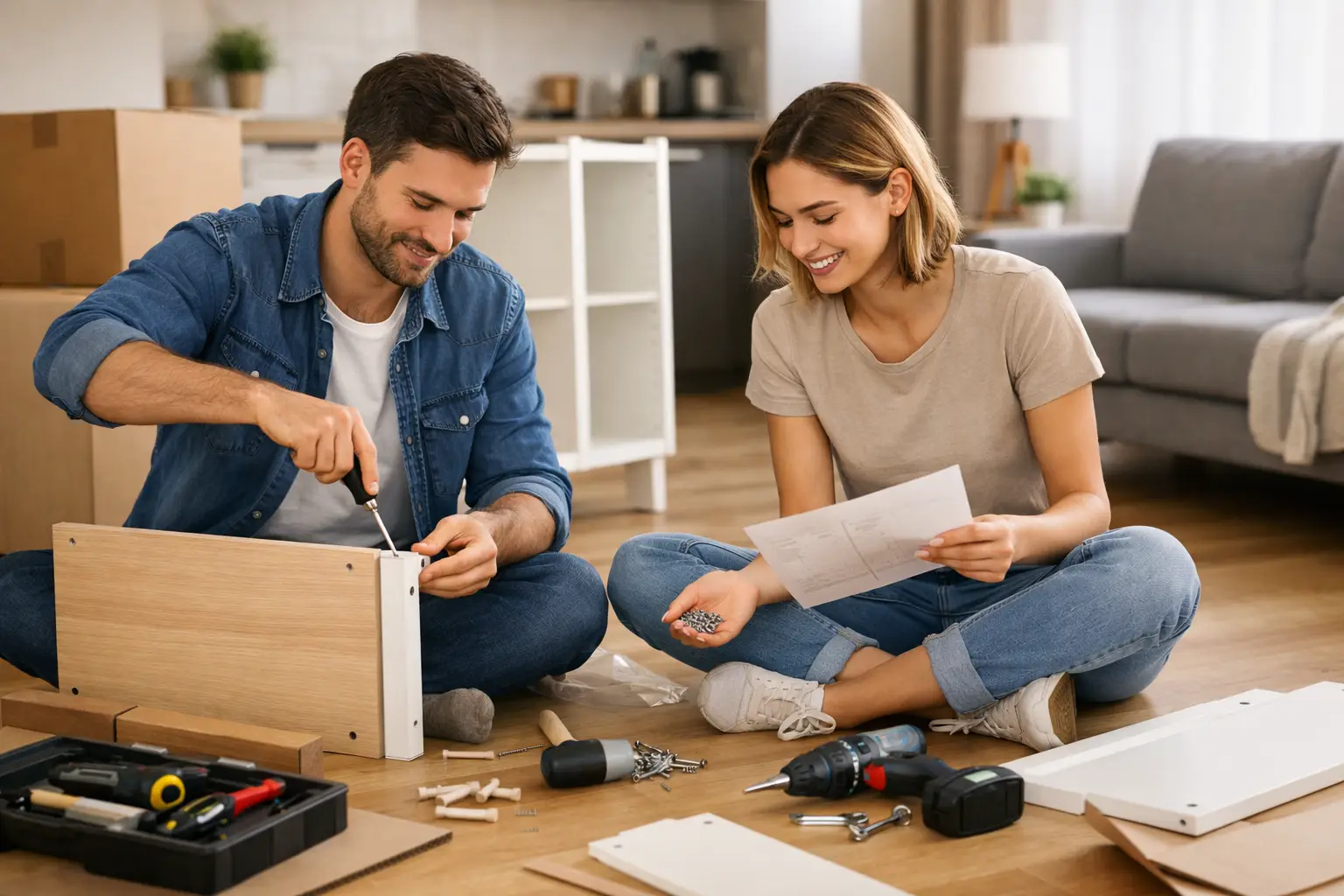
The first night in a new apartment usually looks the same – boxes everywhere, one chair still in a box, and a bed frame that somehow has 27 screws but only 26 that make sense. A solid first apartment furniture assembly guide can save you hours of frustration, prevent damage to your new furniture, and help you get settled faster.
For most first-time renters, furniture assembly feels simple until it is not. A desk goes together backward. A dresser wobbles. A bookshelf looks finished until you notice the back panel is upside down. The goal is not just to get furniture built. It is to get it built safely, correctly, and without turning move-in day into a weekend-long project.
What to assemble first in a new apartment
Start with the pieces that make your home functional right away. Your bed frame should usually come first, followed by a basic table or desk, then seating, and then storage pieces like dressers or bookshelves. If you work from home, your desk may deserve a higher spot. If you have kids, beds and safety-related items should move to the front of the line.
This order matters because move-in fatigue is real. By the time you have carried boxes upstairs, coordinated keys, and figured out where the Wi-Fi router goes, your patience is already low. Prioritizing the essentials gives you a place to sleep, eat, and work even if everything else waits until tomorrow.
It also helps to think about room flow. Large items like bed frames, sectionals, and dining tables should be assembled after you confirm placement. Building a heavy piece in the wrong room, or too close to a wall, creates extra lifting and increases the chance of scraped floors and dinged corners.
How to prepare before you open the first box
The most useful first apartment furniture assembly guide is not really about the instructions in the box. It starts before the box is opened. Clear enough floor space to lay out parts, flatten packing materials as you go, and keep hardware sorted by piece. Small cups, zip bags, or even labeled paper towels can keep screws and washers from disappearing into carpet.
You should also check your apartment surfaces before assembly starts. Hardwood, laminate, and tile can scratch easily under metal parts and cardboard staples. A blanket, rug, or moving pad under the work area creates a buffer and gives you a cleaner space to organize parts.
Take five minutes to confirm that all boxes are present and undamaged. Many first apartment setups include furniture from multiple stores, delivered on different days. It is common for one box in a two-box bed frame or sectional set to be delayed. Starting too early can create a half-built project that blocks the room and adds stress.
The tools that actually help
Most flat-pack furniture says all tools are included. Technically, that may be true. Realistically, the tiny Allen key in the box is not your best friend.
A few basic tools make assembly faster and more precise: a screwdriver with interchangeable bits, a rubber mallet, a level, a tape measure, and a box cutter or scissors for packaging. A cordless drill can help, but only if used carefully. Too much torque can strip particle board, split wood, or overtighten hardware. For many first apartment pieces, hand-tightening the final turns gives better control.
A stud finder is not always necessary for furniture assembly alone, but it becomes important if you are securing tall pieces to the wall. Bookshelves, dressers, and some entertainment units should be anchored, especially in homes with children or pets. Renters sometimes skip this step because they worry about wall damage, but the trade-off is safety. In many cases, a small patch later is better than a tip-over risk now.
Common furniture assembly mistakes to avoid
The biggest mistake is rushing the first few steps. Most furniture problems begin with orientation. If side panels are flipped, pre-drilled holes do not line up later, and people often force the hardware instead of stopping to recheck the diagram. That is how parts get cracked.
Another common problem is tightening everything too soon. With many desks, bed frames, and shelving units, you should leave bolts slightly loose until the full frame is aligned. Final tightening comes at the end. This helps the structure square up properly and reduces wobble.
It is also easy to underestimate weight and balance. Some items look manageable until the final step, when the piece needs to be lifted upright. That is when corners hit walls, legs snap, or one person tries to stabilize too much at once. If a piece is large, awkward, or top-heavy, a second set of hands is the safer choice.
Then there is hardware confusion. Many manufacturers include extra screws or washers, so one leftover piece does not always mean something went wrong. But a handful of leftovers usually means it is worth retracing your steps before you call the project finished.
A room-by-room approach works best
Trying to assemble everything at once creates clutter and slows you down. A better approach is to complete one room before moving to the next.
In the bedroom, focus on the bed frame and dresser first. If the dresser includes anti-tip hardware, install it. In the living room, start with the sofa or sectional, then media furniture, then accent pieces. In the dining area, a table and chairs are usually straightforward, but check that chair legs are tightened evenly to prevent rocking. For a home office, desk stability matters more than speed. Uneven legs or loose crossbars become obvious once monitors and equipment are added.
This room-by-room setup also helps with packaging waste. You can break down boxes as you go instead of letting cardboard pile up across the apartment. That means fewer tripping hazards and a faster path to feeling settled.
When DIY makes sense and when it does not
Some furniture is beginner-friendly. Simple nightstands, small tables, and standard dining chairs are usually manageable if you have time and patience. Other pieces are far less forgiving. Large wardrobes, bunk beds, wall-mounted units, and oversized entertainment centers often involve more parts, more weight, and more ways for small mistakes to create bigger problems.
There is also the time factor. If you just moved, started a new job, or are juggling kids and a lease checklist, spending six hours on assembly may not be the best use of your day. A service professional can often complete in one visit what takes a first-time renter an entire weekend. That convenience is not just about saving labor. It is about reducing stress, avoiding rework, and getting your apartment functional faster.
For many renters in Austin and Central Texas, that is the real value. If you want the setup done correctly without the guesswork, Smart Solutions TX can handle furniture assembly as part of a more stress-free move-in experience.
How to know the job was done right
Furniture should feel solid, level, and properly placed. Drawers should open smoothly. Doors should align. Bed frames should not shift when weight is applied. Shelves should sit square without leaning. If something rocks, squeaks, or pulls apart under normal use, stop and recheck the fasteners before the problem gets worse.
Placement matters too. Leave enough clearance for drawers, doors, and walkways. A well-assembled piece in the wrong spot still creates daily friction. This is especially true in smaller apartments where every inch counts.
Keep the instruction manual and any spare hardware in one labeled bag after assembly is complete. If you move again, that small habit saves a surprising amount of time.
Your first apartment furniture assembly guide for a smoother move-in
The best first apartment furniture assembly guide is really a plan: prioritize essentials, prep the space, use the right tools, and know when a project is worth handing off. Furniture assembly is one of those tasks that looks small on paper but can take over your entire move-in if it goes sideways.
A new apartment should start feeling like home quickly. If that means building a nightstand yourself, great. If it means bringing in reliable help for the heavier, trickier pieces, that makes sense too. The right choice is the one that gets your space safe, functional, and ready for real life without adding more stress than the move already has.