

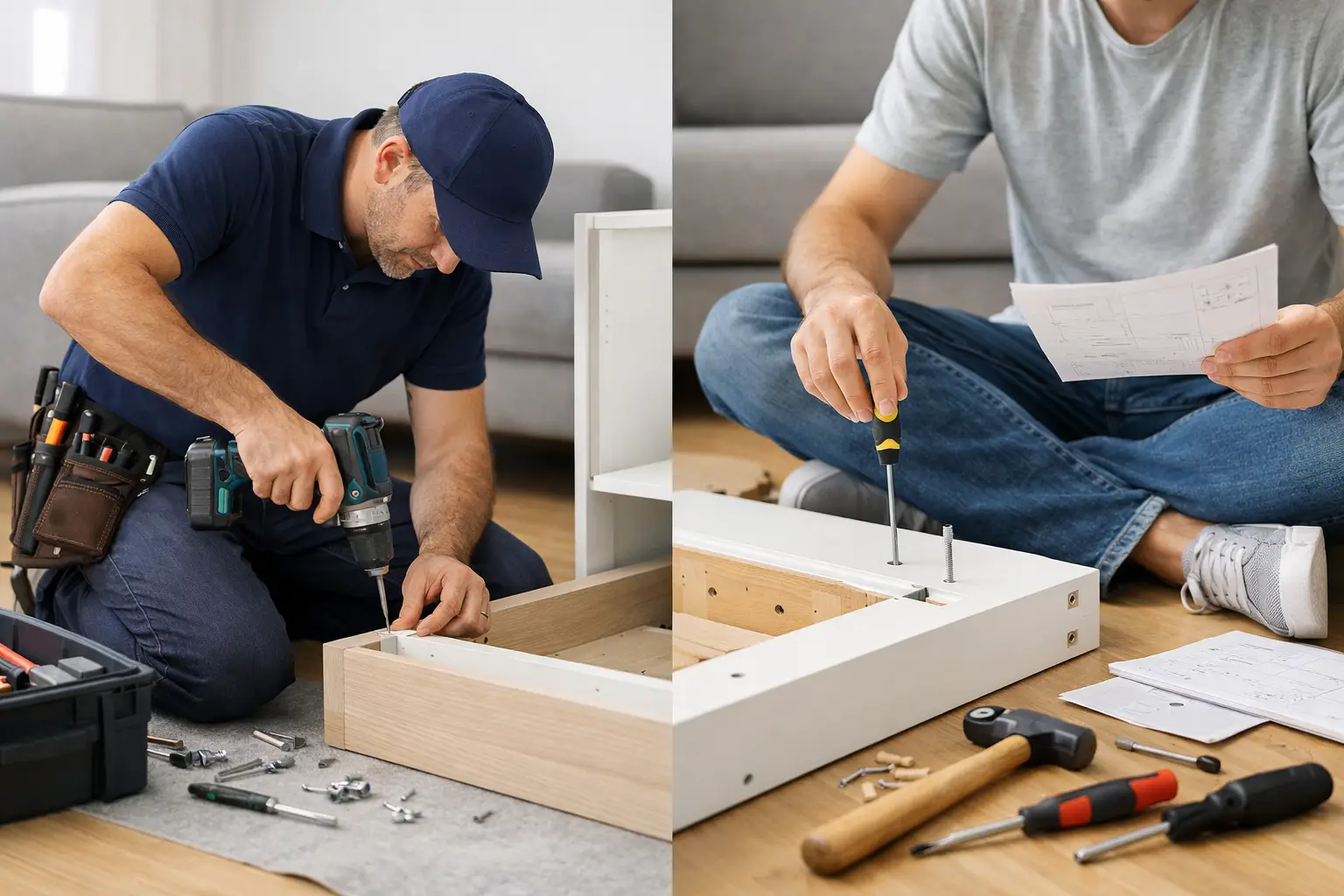
You can usually tell how a furniture project is going to go within the first ten minutes. The box is heavier than expected, the instructions look more like a puzzle than a plan, and one missing screw suddenly turns your Saturday into a three-hour problem. That is exactly why professional furniture assembly vs DIY is a real decision for busy homeowners and renters, not just a question of whether you own a screwdriver.
For some people, DIY assembly makes perfect sense. For others, hiring help is the faster, safer, and less stressful choice. The right answer depends on the furniture itself, your schedule, your comfort level with tools, and how much risk you are willing to take with your walls, floors, and new purchase.
Professional furniture assembly vs DIY: what really changes?
The biggest difference is not just who turns the screws. It is who takes on the time, pressure, and margin for error.
With DIY, you are responsible for everything from carrying the boxes inside to sorting hardware, following the sequence correctly, leveling the piece, and making sure it is stable enough for everyday use. If something is unclear, you troubleshoot it. If a panel gets scratched or a cam lock gets forced the wrong way, you absorb the result.
With professional assembly, the value is in the outcome as much as the labor. You are paying for experience, efficiency, and the confidence that the item will be put together correctly the first time. For families settling into a new home, renters trying to furnish an apartment quickly, or professionals who simply do not want to spend their evening on instruction manuals, that peace of mind matters.
When DIY assembly makes sense
DIY is usually the better fit when the furniture is simple, the stakes are low, and you have enough time to work carefully.
A small side table, a basic bookshelf, or a straightforward dining chair set may be manageable if the instructions are clear and the parts are all there. If you enjoy hands-on projects, already have the right tools, and do not mind going slowly, DIY can save money upfront.
It also makes sense when the item is not especially sensitive to minor imperfections. A storage shelf in a garage has a different standard than a bed frame, wall unit, or nursery dresser. If a small alignment issue will not affect daily use or safety, you may be comfortable handling it yourself.
That said, DIY only works well when you are realistic about the job. Many people underestimate how long assembly takes, especially with flat-pack furniture, large dressers, media consoles, bunk beds, or desks with drawers and cable management features. What looks simple in the store or online often becomes much more involved once the pieces are spread across your floor.
When professional furniture assembly is worth it
Professional help becomes the smarter choice when the furniture is large, complex, time-sensitive, or safety-related.
Beds, dressers, entertainment centers, office furniture, sectional frames, and storage systems often involve multiple steps where one small mistake early on can throw off the rest of the build. If the unit needs to sit flush, support weight properly, or line up evenly, precision matters. So does speed.
That is especially true after a move. If you are unpacking, managing kids, starting a new job, or trying to get a home functional fast, furniture assembly can become one more draining task on an already full list. Hiring a trusted service turns an open-ended project into a scheduled solution.
There is also the issue of damage. Improper assembly can lead to stripped hardware, cracked panels, uneven legs, drawer misalignment, or scratched floors. In some cases, unstable furniture creates a real safety concern. A professionally assembled piece is more likely to be secure, level, and ready for daily use without the worry of whether something was missed.
The hidden costs in the DIY route
DIY looks cheaper at first because you are not paying labor. But cost is not only about the receipt.
Your time has value. If a project takes four hours instead of one, that matters. If you need to buy tools, replace damaged hardware, or fix a mistake, the savings can disappear quickly. If you are assembling furniture after moving day, the physical effort alone may be enough to make the do-it-yourself route feel more expensive than expected.
There is also the mental cost. Many customers are not avoiding DIY because they cannot do it. They are avoiding it because they do not want the frustration that comes with confusing instructions, heavy lifting, and the risk of getting halfway through before realizing a panel is backward.
That stress is easy to dismiss until you are in the middle of it. Then it becomes obvious why convenience is not a luxury for many households. It is a practical decision.
Professional furniture assembly vs DIY for different rooms
The room often tells you which option makes more sense.
In a bedroom, bed frames and dressers need stability. A mistake there affects daily comfort and, in some cases, safety. In a living room, media consoles and entertainment furniture often need to be level, properly anchored, and ready to support expensive electronics. In a home office, desks and shelving need to be assembled accurately enough to handle monitors, equipment, and frequent use.
Kids’ furniture deserves extra caution. Cribs, bunk beds, changing tables, and dressers need careful assembly and proper hardware placement. This is one area where many people decide that saving time and reducing risk outweighs the appeal of doing it themselves.
Smaller accent pieces, on the other hand, may still be reasonable DIY projects if you have the time and patience.
Time, convenience, and peace of mind
For many households in Austin and Central Texas, the real comparison is not skill. It is bandwidth.
Busy professionals may have no interest in spending their only free evening sorting bolts. Parents may need a room set up before bedtime, not after a weekend of trial and error. New residents may be juggling deliveries, utilities, and move-in logistics all at once. In those situations, hiring assembly help is less about outsourcing a task and more about protecting your time.
That is where a dependable, one-call service becomes valuable. When technicians are background-checked, scheduling is fast, and the work is backed by a service guarantee, the decision gets easier. You are not just paying someone to build furniture. You are choosing a more predictable, stress-free setup experience.
How to decide which option is right for you
A simple way to decide is to ask four questions.
First, how complicated is the piece? If it has multiple drawers, moving parts, anchoring requirements, or a long instruction booklet, professional assembly may save you a lot of trouble.
Second, what happens if it is done wrong? If the answer is wobbling, damage, safety issues, or expensive rework, that leans toward hiring help.
Third, how much time do you actually have? Not idealized weekend time, but real time. If you need the room usable today or tomorrow, a professional can often get you there faster.
Fourth, do you want to do this? That question matters more than people admit. Even if you could handle the project, it may still be worth handing it off so you can focus on work, family, or settling into your space.
There is no one-size-fits-all answer. Some furniture is perfectly fine to assemble on your own. Some is better left to experienced hands. Many households end up using both approaches depending on the item.
For people who want fewer headaches, faster results, and more confidence in the finished product, professional assembly is often the better value. Smart Solutions TX helps homeowners and renters take that task off their list with reliable service that puts care, precision, and convenience first.
The best choice is the one that leaves you with furniture you can trust and a home that feels ready, not half-finished.