

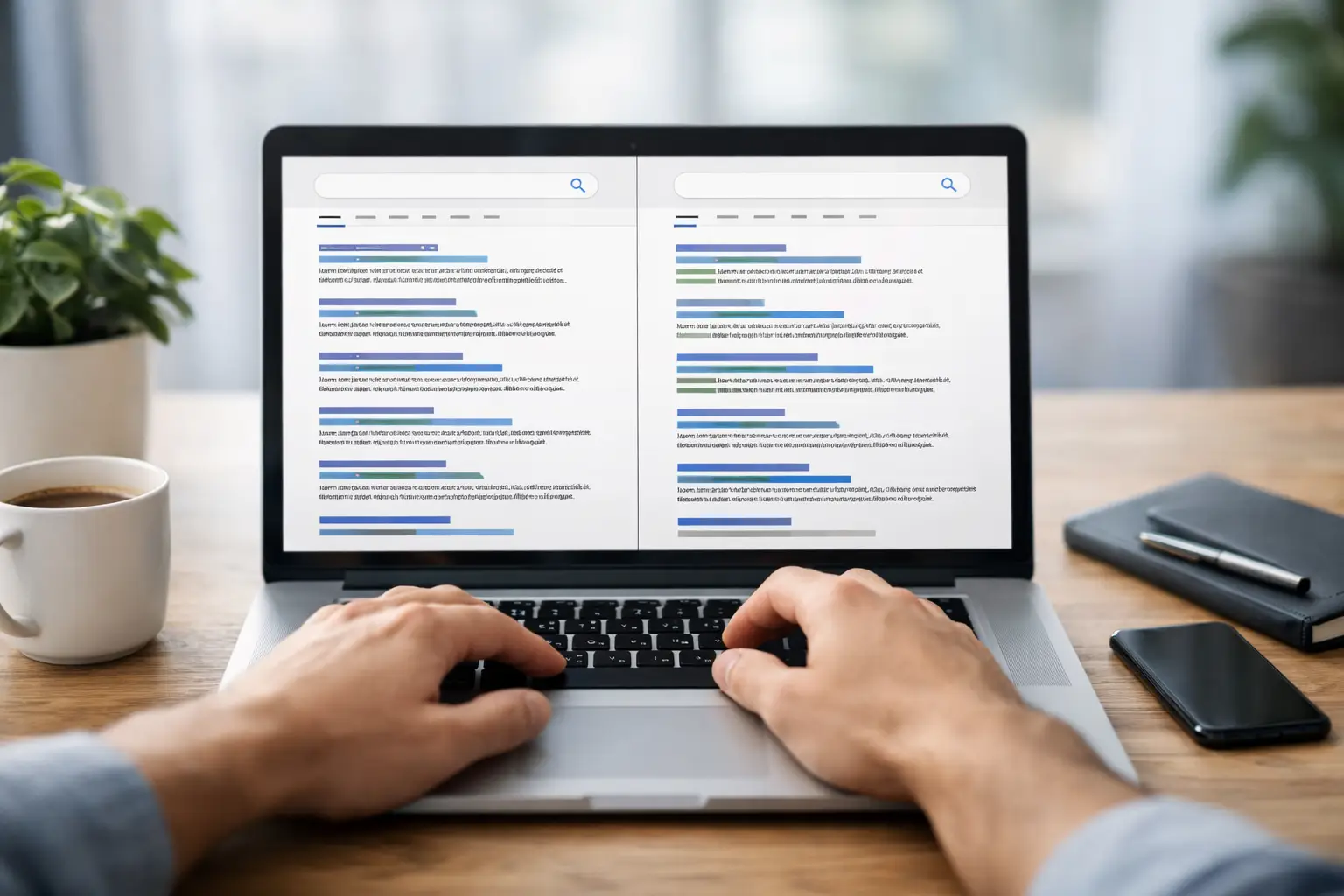
You search for the same thing your spouse, coworker, or neighbor searched, and the results do not match. That can feel frustrating fast, especially when you are trying to compare prices, find a business, or figure out which information to trust. If you have ever asked, why are my search results different, the short answer is this: search engines tailor results based on context, and that context changes more often than most people realize.
For most people, different search results are not a sign that something is broken. They are usually the result of location, search history, device type, account settings, timing, and the exact words used in the search. A small difference in any one of those can change what shows up first.
Why are my search results different from other people’s?
Search engines are built to predict what will be most useful to each person in a specific moment. That means the results page is not one fixed list that everyone sees. It is closer to a best guess based on signals the search engine has available.
Location is one of the biggest factors. If you search for “TV mounting near me” in Austin, you may see local providers, map results, and service pages that someone in Round Rock or San Marcos would not see in the same order. Even within the same metro area, neighborhoods can influence local results. Search engines assume that nearby options matter, so they adjust quickly.
Personalization also plays a role. If you are signed into a Google account, your previous searches, browsing activity, and app usage may influence what appears. Someone who often visits home improvement sites may see more DIY-heavy results. Someone who usually clicks local service providers may see more local business pages and maps.
Device differences matter too. A phone search can produce a different results page than a desktop search, even when the words are identical. Mobile results often prioritize maps, tap-to-call business listings, and fast-loading pages. Desktop results may show more long-form articles, comparison pages, or broader browsing options.
Then there is timing. Search results shift constantly. News updates, fresh content, business hours, seasonal demand, and trending topics can all move listings around. Search for something in the morning and again at night, and you may not get the same page.
The most common reasons search results change
If you are trying to pinpoint what is happening, start with the basics. In many cases, the answer is simpler than it seems.
Your location is affecting local results
This is the most common explanation, especially for service-based searches. Terms like “movers,” “furniture assembly,” “best electrician,” or “same day help” are heavily location-driven. Search engines want to show businesses that are close enough to actually serve you.
That is helpful when you need a fast solution, but it also means two people a few miles apart can get different local packs, maps, and business pages. For home services, this is normal behavior, not an error.
You and the other person are using different wording
A search for “cheap movers” is not the same as “reliable movers” or “local moving help.” Search engines treat those phrases as signals of intent. One suggests price sensitivity. Another suggests trust and quality. The third may trigger more local service listings.
Even small wording changes can reshape the page. That is why comparing results only works if the search is truly identical.
Your search history is shaping the page
If you have been researching moving companies all week, the search engine may learn that you prefer local service pages, customer reviews, or map listings. If someone else has been reading articles about moving checklists, they may see more informational content instead.
This can be convenient, but it can also create confusion when you are trying to compare what others see. Personalization is useful until you want a neutral starting point.
You are signed in and someone else is not
Being logged into an account gives the search engine more data to work with. That can influence suggested results, autocomplete, and ranking order. Logged-out searches tend to be less personalized, though they are still influenced by location and device.
Different devices show different layouts
Search engines do not just rank pages differently. They also package results differently. On a phone, you may get maps first. On a desktop, you may get standard website listings first. Voice search and smart assistants add another layer because they often return just one spoken answer instead of a full page.
Search results are being tested in real time
Search engines run ongoing experiments. That means two users can occasionally see different layouts, snippets, or ranking positions as part of platform testing. This is less obvious to the average user, but it does happen.
Why are my search results different even on my own devices?
This is where people get caught off guard. You search on your phone and get one set of results. You search again on your laptop and see something else. That does not always mean your settings are wrong.
Your phone may be using precise location data while your laptop only has a general city location. Your browser on one device might be signed in, while the other is not. One might have cookies and browsing history saved, and the other might be in private mode. Those differences are enough to change the results.
There is also the issue of app-based search versus browser-based search. Searching inside the Google app can produce a slightly different experience than searching in Safari or Chrome. The engine is similar, but the user context is not always the same.
How to get less personalized search results
If your goal is to compare results more fairly or troubleshoot what is happening, there are a few practical ways to reduce personalization.
Start by using private or incognito mode. This helps limit the effect of saved browsing history and cookies. It does not completely remove location-based influence, but it can reduce personalization.
You can also sign out of your Google account before searching. That removes account-level history and preferences from the equation. If you want to take it a step further, compare results on the same device, in the same browser, with the exact same wording.
Checking your location settings matters too. If your phone has precise location turned on, it may produce more localized results than a desktop. Turning location access off can help you see a broader version of the page, though some local queries may become less useful.
If you are comparing local businesses, be aware that maps results can still vary based on proximity, review signals, relevance, and service area settings. For service companies, that is part of how search is designed to work.
When different search results are actually helpful
Not every search should be neutral. If you need a nearby furniture assembly team today, you probably want search results shaped by your location. If you are looking for a local mover with online booking, ratings, and a clear service guarantee, personalized local results can save time.
That is the trade-off. A customized page is less consistent across users, but often more useful in the moment. Search engines are trying to reduce friction by showing what seems most relevant first.
For homeowners and renters, that often means local intent wins. Searches related to moving, home setup, repairs, and installations tend to surface businesses that are close, available, and established in your area. If you are in Central Texas and looking for practical help, that local focus can be exactly what you need.
When to be cautious about different results
There are times when different search results can create confusion. If you are researching health, legal, or financial topics, personalization can make it harder to compare sources objectively. The same goes for shopping searches, where one user may see local sellers and another sees national retailers.
It can also matter when you are evaluating a business. Review snippets, map placement, and service pages may appear in different positions depending on your location and search behavior. That is one reason it helps to look beyond the first result and compare a few options carefully.
For service searches, trust signals still matter more than position alone. Clear service details, background-checked teams, strong customer feedback, and a real guarantee tell you more than rank order by itself.
A better way to think about search results
If you keep asking, why are my search results different, the most practical answer is that search is doing what it was built to do – respond to your situation, not just your words. That can feel inconsistent when you compare screens, but it is usually a reflection of context rather than a problem.
The easiest path is to decide what kind of search you need. If you want broad research, reduce personalization and compare carefully. If you want fast local help, let location do some of the work for you. And if you are searching for home services, focus less on whether two people saw the exact same page and more on whether the company in front of you feels dependable, responsive, and ready to get the job done right.
When your time is tight and your to-do list is already full, the best search result is not always the one that looks the same for everyone. It is the one that gets you to a clear, trustworthy solution without adding more stress.