

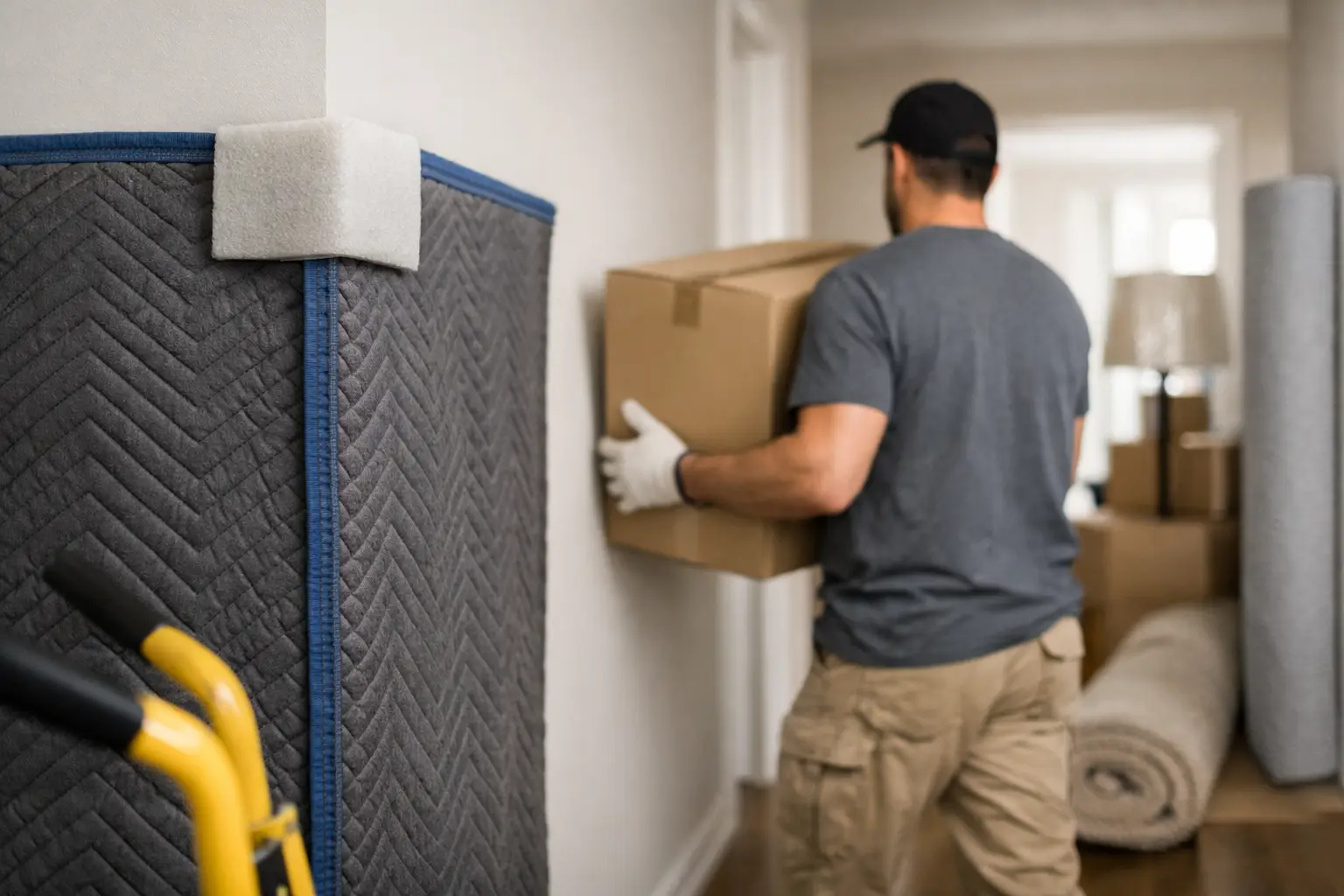
A couch clipped a hallway corner, the paint came off, and now move-out day includes a repair run. That is usually how people learn how to protect walls during move day – after the damage is already done. The good news is that most wall damage is preventable with a little planning, the right materials, and better carrying habits.
If you are moving out of an apartment, protecting the walls can help you avoid deposit deductions. If you are moving into a new home, it keeps your fresh paint, trim, and corners looking the way they should. Either way, wall protection is one of those small details that can save real time, money, and stress.
Why walls get damaged so easily during a move
Most wall damage happens in tight spaces, not wide-open rooms. Hallways, stairwells, entryways, and door frames create pinch points where dressers, mattresses, and sectionals have to turn at awkward angles. Even a lightweight item can scrape paint if it shifts unexpectedly.
The other issue is pace. Moving days tend to feel rushed, especially when an elevator window, truck rental, or lease deadline is involved. When people hurry, they carry furniture too high, skip padding, or try to force one more item through a narrow path. That is when gouges, dents, and corner chips happen.
How to protect walls during move prep
The best time to prevent wall damage is before the first box gets lifted. A clean path gives you more control and fewer surprises.
Start by walking the entire route from the largest room to the front door. Look for low light fixtures, sharp turns, narrow doorways, and anything on the floor that could cause someone to stumble. Remove rugs that slide, floor baskets, wall art, and small furniture that crowds the path. If kids or pets will be home during the move, plan for them to stay out of the traffic areas.
Next, measure your biggest items. This step gets skipped all the time, but it matters. Knowing the width and height of your sofa, dresser, refrigerator, or headboard helps you decide whether something can clear a hallway upright or needs to be tilted, disassembled, or wrapped differently. Guessing usually leads to wall contact.
If a piece is close to the width of a doorway, take the extra ten minutes to remove legs, shelves, or detachable hardware. That little bit of prep often prevents the kind of twisting that leaves long scrape marks on paint and drywall.
Use the right wall protection materials
You do not need specialty gear for every move, but you do need some protection in the highest-risk areas. The most useful materials are painter’s tape, moving blankets, cardboard sheets, and corner guards.
Painter’s tape is helpful because it holds temporary protection in place without being too harsh on painted surfaces. You can tape flattened cardboard or lightweight padding over vulnerable corners, around entryways, and along narrow hall sections where large items are likely to brush the wall.
Moving blankets do double duty. Wrap them around furniture first, then use extras to cushion areas where contact is most likely. They are especially helpful around stair railings, tight apartment hallways, and freshly painted walls.
Cardboard is underrated. Large flattened boxes can shield lower wall sections from hand trucks, bins, and box edges. It is not the best choice for every surface, but for short-term protection during a move, it is practical and affordable.
Corner guards are worth using if you are dealing with tight turns. Drywall corners chip fast, and they are one of the first places damage shows up. If you have ever seen a wall corner crushed by one bad pivot, you know why they matter.
Protect the furniture too
If you are focused only on the walls, you miss half the problem. Furniture with exposed wood edges, metal frames, or loose drawers is much more likely to damage the home on the way out or in.
Wrap large pieces with moving blankets and secure them so the padding does not slide. Remove or tape shut drawers and doors. Take glass shelves out of cabinets. Cover sharp furniture corners whenever possible. Even something simple like wrapping a bed frame leg can make a big difference when you are navigating stairs.
Mattresses should be bagged, both for cleanliness and control. A bare mattress can drag against a wall and leave marks, while a mattress bag makes it easier to slide and turn with less friction.
Better lifting and carrying makes the biggest difference
A lot of people assume wall protection is mostly about tape and padding. In reality, carrying technique is often the deciding factor.
Keep large items lower than shoulder height when possible. When furniture gets carried too high, the person in front usually cannot see corners or ceiling clearance. That is how walls, trim, and light fixtures get hit.
Move slowly through tight spots and assign one person to call directions. Too many voices create confusion. One person should guide the turn, call out clearances, and tell the carriers when to stop, tilt, or reset. That kind of coordination feels small until you are trying to get a couch through a stair landing without taking paint off both sides.
It also helps to use the right equipment. Dollies, hand trucks, lifting straps, and sliders reduce strain and help keep heavy items stable. But they are only useful if the path is clear and the item is balanced. A loaded dolly tilted too far back can still swing into a wall.
Watch the highest-risk areas
Some spots deserve extra attention because they are where damage happens most often.
Door frames take a lot of hits, especially when carrying bulky items that are wider at one end. Protect both sides if the opening is tight. Hallway corners are another common problem area because furniture tends to swing wide during turns. Stairwells are tricky because the angle of the item changes as people move up or down, which can bring the top edge into the wall unexpectedly.
Apartment buildings add another layer. Shared hallways, elevators, and lobby entrances can be harder to control, and building management may expect any damage to be repaired quickly. If you are moving in or out of a multi-unit property, it is smart to protect common-area walls too, not just your own.
When DIY works and when it does not
For a small move with light furniture and wide access points, a careful DIY approach can work well. If you have a few rooms, sturdy help, and enough time to move without rushing, basic wall protection and better handling may be all you need.
But it depends on the layout and the pieces involved. Third-floor walk-ups, narrow staircases, oversized sectionals, solid wood furniture, and last-minute timelines raise the risk quickly. So do moves where you need to protect both the home you are leaving and the one you are entering.
That is where experienced help can save more than just effort. Professional movers who handle in-home labor regularly know how to pad furniture, manage angles, and move through tight spaces without turning every doorway into a risk point. For busy homeowners and renters, that peace of mind is often worth it. Smart Solutions TX helps Central Texas customers with stress-free moving support designed to reduce damage, delays, and the usual moving-day chaos.
A few mistakes that cause wall damage fast
Trying to force furniture through without re-angling it is a big one. If something is not clearing easily, stop and reset. Pushing harder usually makes things worse.
Skipping disassembly is another common mistake. Bed frames, table legs, and large shelving units often need to come apart. People avoid this because it feels slower, but it is usually faster than patching drywall later.
Loose packing also creates problems. Boxes with shifting contents are harder to carry steadily, and poorly wrapped furniture can lose its padding mid-move. If protection slides off during the carry, the wall becomes the first thing that absorbs the impact.
How to protect walls during move-in too
People tend to be more careful leaving a place because of the deposit. Then they arrive at the new home tired, rushed, and less organized. That is often when the first marks show up on freshly painted walls.
Use the same approach on move-in day that you used on move-out day. Clear the route, protect corners, and stage boxes in a way that keeps walkways open. Do not stack everything near the front door and create a bottleneck. The cleaner the flow, the less likely someone is to bump a wall while trying to squeeze by.
If you recently had a TV mounted, furniture assembled, or paint touched up, take extra care in those finished spaces. New setups look great, but they are also the easiest to nick when the house is full of boxes and people moving fast.
A smooth move is not just about getting everything from one address to another. It is about arriving without the extra repairs, surprise charges, or frustration that come from preventable damage. Protect the walls, slow the pace where it matters, and give yourself enough support to move with confidence. Your future self will notice the difference the minute the last box is inside.