

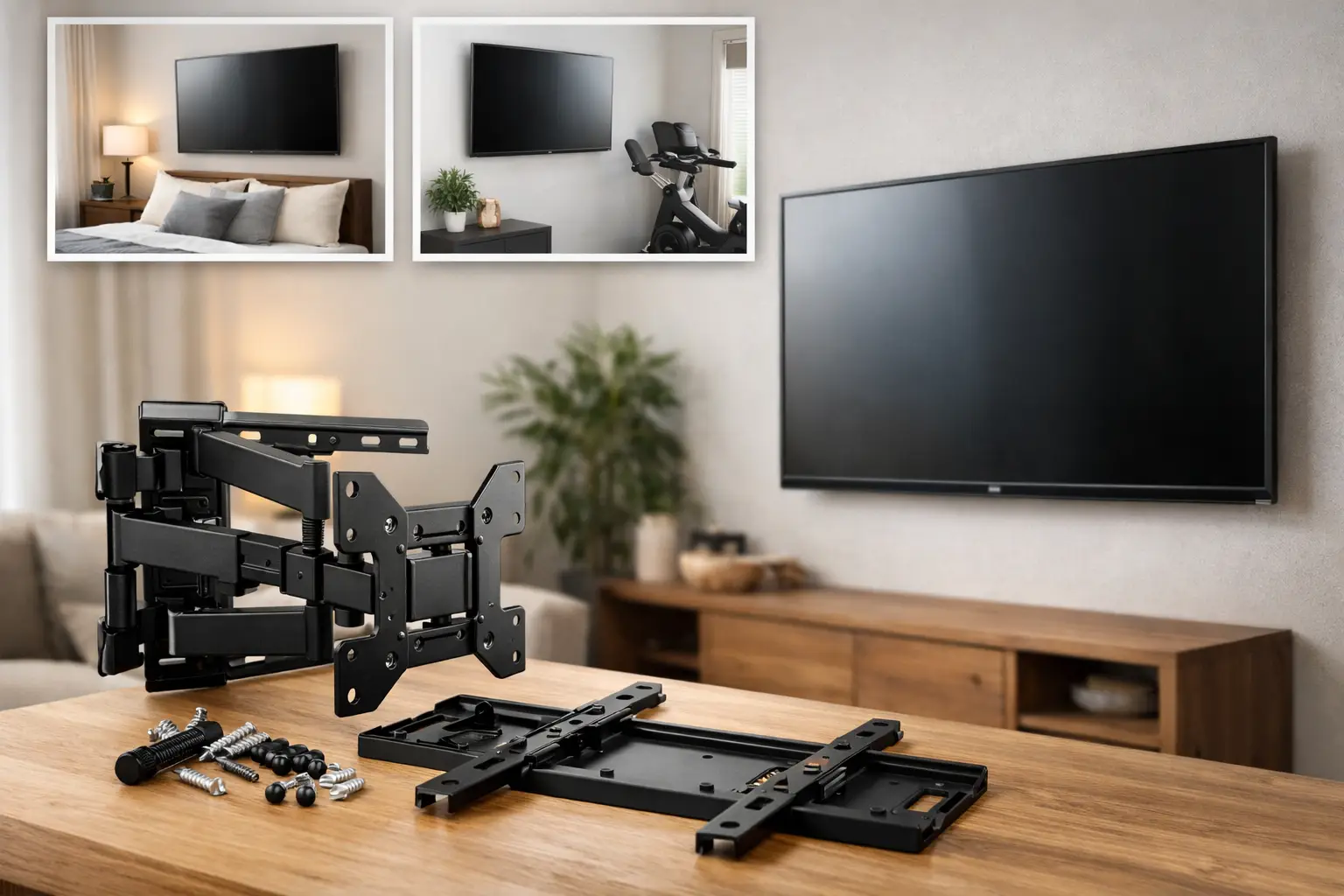
A TV that looks perfect in the box can become a frustrating project the moment you hold a wall mount up to drywall and start guessing. This tv wall mount buying guide is here to make that decision easier, so you can choose a mount that fits your screen, your wall, and the way you actually use the room.
For most homeowners and renters, buying the wrong mount does not just mean a crooked TV. It can mean blocked outlets, bad viewing angles, damaged walls, or a setup that feels awkward every day. A little planning up front saves time, protects your investment, and makes the final result feel clean and stress-free.
What a TV wall mount buying guide should help you decide
The right mount depends on more than screen size. It also depends on where the TV is going, how often you want to adjust it, and what kind of wall is behind it.
A living room TV that stays in one position has different needs than a bedroom TV mounted high above a dresser. A game room may benefit from more movement and angle adjustment, while a home office setup might call for a tighter, low-profile look. The best choice is usually the one that matches your room layout and your daily habits, not the one with the most features.
Start with the three main mount types
Most TV wall mounts fall into three categories: fixed, tilting, and full-motion. Each one solves a different problem.
Fixed mounts
A fixed mount keeps the TV close to the wall and does not move once installed. This is usually the cleanest look and often the most affordable option. If your seating area is directly in front of the TV and your screen is being mounted at a comfortable eye level, a fixed mount can be exactly what you need.
The trade-off is flexibility. If glare becomes an issue or the room layout changes, you cannot adjust the angle without reinstalling.
Tilting mounts
A tilting mount lets the screen angle slightly up or down. This is helpful when the TV is mounted a little higher than ideal, such as over a fireplace or in a bedroom. It can also reduce glare from windows or overhead lighting.
Tilting mounts are a practical middle ground. You get some adjustment without the extra depth and movement of a full-motion arm.
Full-motion mounts
A full-motion mount extends away from the wall and can swivel, tilt, and sometimes rotate. This works well in corner installations, open-concept rooms, or spaces where people watch from more than one seating area.
The convenience is real, but so is the added complexity. Full-motion mounts place more leverage on the wall, so proper installation matters even more. They also sit farther off the wall, which may not be the look everyone wants.
Do not shop by TV size alone
A common mistake is buying a mount based only on the number of inches on the TV box. Screen size matters, but weight capacity and VESA pattern matter just as much.
The VESA pattern is the spacing of the mounting holes on the back of your TV. Your mount and your TV need to match. Most mounts list compatible VESA sizes and weight limits clearly. If your TV falls within the screen-size range but exceeds the weight limit, that mount is not the right choice.
It is also smart to leave yourself some margin. If your TV weighs close to the maximum rating, a heavier-duty mount may offer more confidence and stability over time.
Your wall type changes everything
This part gets overlooked until installation day. Not every wall supports a TV mount the same way, and this is where many DIY projects go sideways.
Drywall over wood studs
This is the most common and usually the most straightforward setup. The mount should be anchored into the studs, not just the drywall. Stud spacing affects where the TV can be centered, although some mounts give you more flexibility than others.
Brick or concrete
Masonry walls can provide a strong mounting surface, but they require the right anchors, drill bits, and technique. Installation is less forgiving, and patching mistakes is harder than with drywall.
Metal studs or specialty walls
Metal studs, plaster, tile, and fireplace surrounds can complicate the job. Some situations need specialized hardware or an alternate mounting approach. If you are unsure what is behind the wall, it is worth confirming before you buy the mount.
For renters, wall rules matter too. Even if a mount can be installed safely, your lease may limit what modifications are allowed. That is worth checking early, not after the holes are drilled.
Think about viewing height before you buy
A secure mount is only half the job. The TV also needs to be comfortable to watch.
In a main living area, the center of the screen should generally land close to seated eye level. If the TV ends up too high, neck strain becomes part of movie night. In bedrooms and flex spaces, a slightly higher position can work because people often watch while reclining.
This is one reason mount type matters so much. If the room forces a higher placement, a tilting or full-motion mount may make the setup feel much better in daily use.
Plan for cables, outlets, and devices
A wall-mounted TV looks best when the details around it are handled well. Before buying a mount, think about where your power outlet sits, where HDMI cables will run, and where streaming boxes, soundbars, and gaming consoles will live.
Some low-profile mounts leave very little room behind the TV. That can be a great look, but it may create headaches if you use bulky plugs or need frequent access to ports. A slightly different mount style can make setup much easier without changing the look dramatically.
If you want a truly clean finish, cable management should be part of the plan from the beginning. It is much easier to think through cord placement before installation than after the TV is already on the wall.
When a cheaper mount is fine, and when it is not
Not every project requires the most expensive mount on the shelf. A quality fixed mount from a reputable manufacturer can be a smart buy for a straightforward setup on a standard wall.
Where it makes sense to be more selective is with larger TVs, full-motion mounts, and harder wall surfaces. In those situations, build quality matters more. Better steel, smoother movement, stronger hardware, and more reliable fit can make a real difference in how secure and stable the TV feels.
The cheapest option is not always a bargain if it creates installation limitations or leaves the screen wobbling every time it is adjusted.
A TV wall mount buying guide should also consider who is installing it
This is where many buying decisions become easier. If you are fully comfortable finding studs, reading mount templates, drilling accurately, and managing a heavy screen safely, you may be fine choosing a mount and installing it yourself.
But if you are mounting a large TV, dealing with brick or above-fireplace placement, or simply want the job done cleanly the first time, professional installation can remove a lot of risk. It helps protect the wall, the TV, and your time.
For busy households, convenience matters just as much as hardware specs. A dependable installation service turns a half-day project into a finished result without the guesswork. That peace of mind is a big reason many Central Texas homeowners and renters choose hands-on help from trusted pros like Smart Solutions TX.
Quick signs you are choosing the right mount
You are probably on the right track if the mount matches your TV’s VESA pattern and weight, fits your wall type, supports your viewing angle, and leaves enough space for cables and ports. The best mount should feel like it was chosen for your room, not just your screen.
If you are still stuck between two options, go back to the everyday question: will this TV stay in one place, or do you need to move it? That answer usually points you toward the right style faster than comparing product pages for an hour.
Buying a TV wall mount should make your space feel easier to enjoy, not harder to figure out. Choose the mount that fits your room, respect the wall you are working with, and do not be afraid to get help when the job calls for it.